01 Diagnostics · Cost guide
3D CBCT (DVT) dental scan: cost and what it includes.
A cone-beam CT - in German, a DVT - gives a true three-dimensional view of your teeth, roots and jawbone. The most common question we hear is simply: what does it cost? Here is an honest answer, including what drives the price, when a 3D scan is genuinely worthwhile, and what is included for international patients.
02 In one paragraph
What a CBCT / DVT scan actually is.
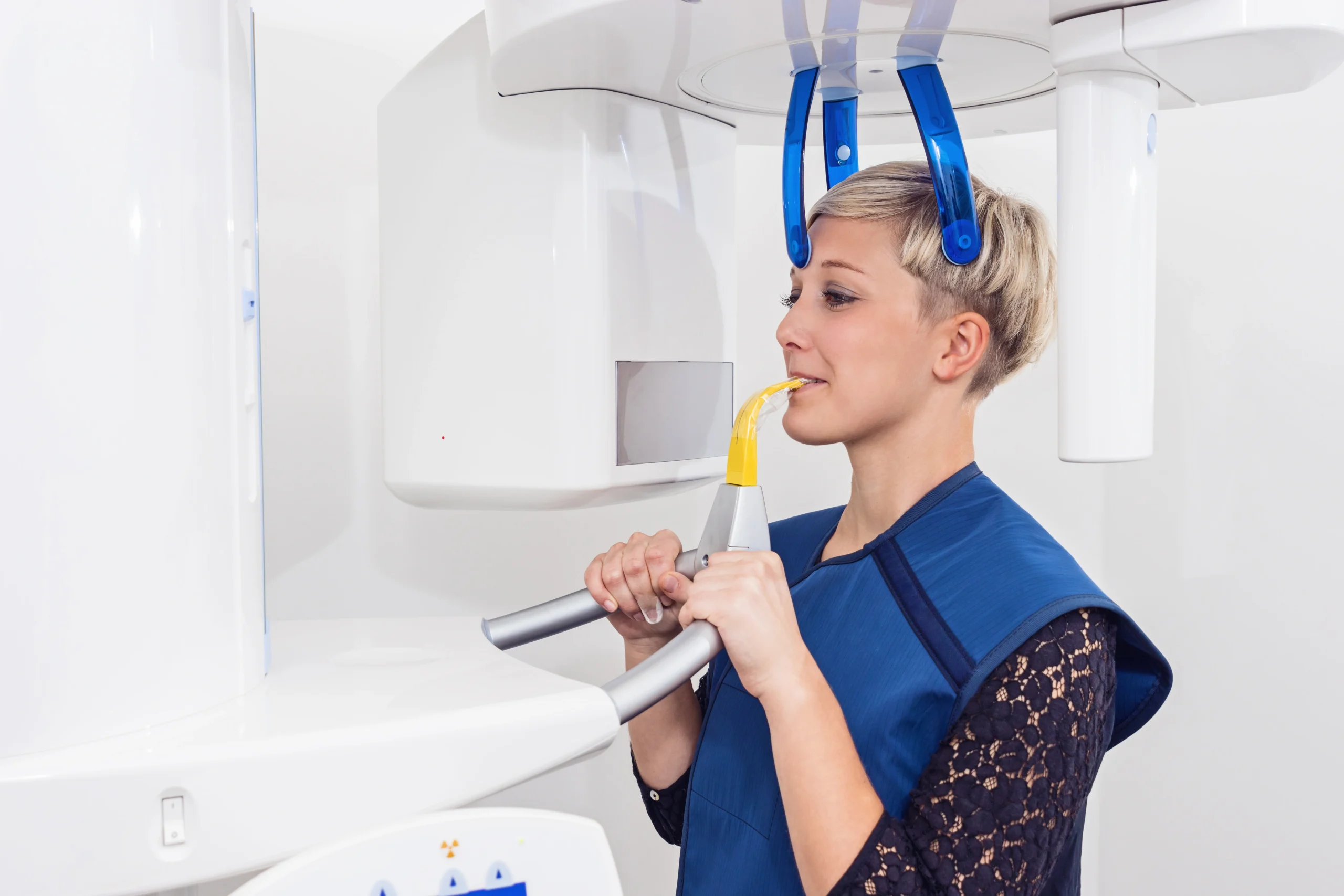
A cone-beam computed tomography scan (CBCT, called digitale Volumentomographie or DVT in Germany) rotates an X-ray source once around your head to build a detailed 3D model of the teeth, roots, nerves and bone. Unlike a flat 2D X-ray, it lets us look at a structure from any angle and measure it precisely - which is exactly why it matters for implant planning and for assessing hidden inflammation in the jaw.
This page is about cost, not the technology itself. If you want the full explainer - how the scan is taken, what it reveals and how we read it - see our dedicated page on 3D / CBCT imaging in dentistry.
03 What drives the cost
Why there is no single price.
A 3D scan is not one fixed product. The fee reflects how much of the jaw is imaged, why it is needed, and how much interpretation comes with it. These are the factors that move the figure up or down.
Field of view & resolution
How much is imaged, and in how much detail. A small volume around a single tooth costs less than a large field covering both jaws, and a high-resolution volume takes more data and more careful reading than a quick overview scan. We choose the smallest field and the resolution that answer the question.
The clinical question
Implant planning, a suspected chronic bone inflammation (FDOK/NICO), a difficult root, or the jaw joint (TMJ) each need a different scope - and the right scope drives the price.
Interpretation & report
The scan itself is only part of the value. A careful reading, a written report and, where relevant, a second-opinion assessment are what turn images into a decision.
| Purpose | Typical field of view | What it adds |
|---|---|---|
| Single tooth / root assessment | Small | A focused look at one root and the surrounding bone before a keep-or-replace decision. |
| Single implant planning | Small-medium | Exact bone height, width and nerve position for a precise, safe implant placement. |
| FDOK / NICO assessment | Medium | Evaluation of suspected chronic, often symptom-free inflammation in the jawbone. |
| Full upper & lower jaw | Large | A complete 3D overview for multi-tooth planning or a thorough whole-mouth review. |
There is no single flat price: the fee depends on the field of view and the reason for the scan. You receive a written quote before any scan.
Single-tooth CBCT
A single-tooth CBCT images only a small field of view - one tooth, its root and the bone around it - so it usually sits at the lower end of the fee range for 3D dental scans. In Germany the fee is calculated under the German fee schedule for doctors (GOÄ), and the exact amount depends on your case. You receive a written quote before any scan.
The honest answer to “what does a 3D scan cost?” is it depends on what you actually need - so we quote your case, not a number off a list.
Get a written quote for your scan. Briefly describe in the form what the scan would be for – we get back to you with the next steps.
Ask for a quote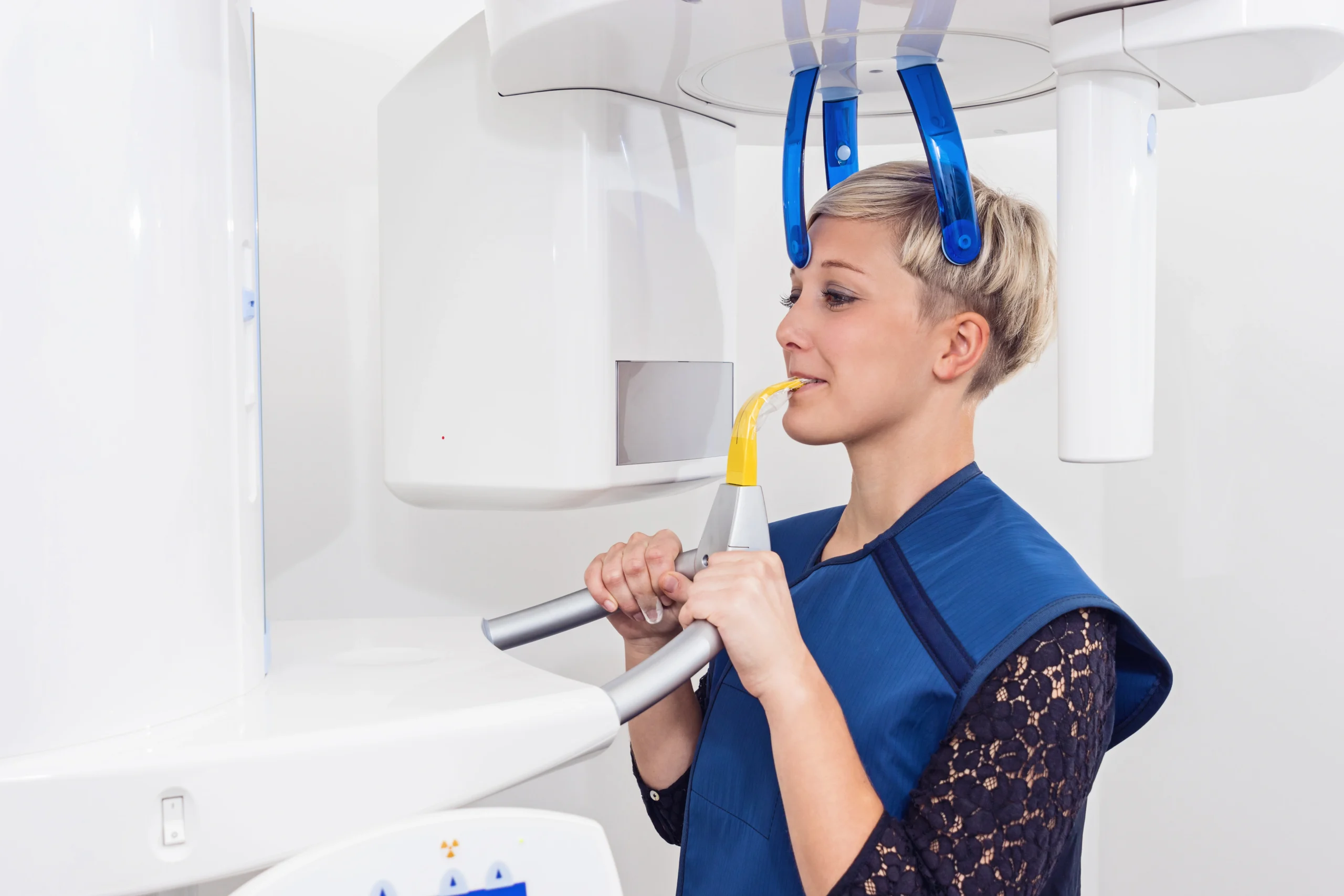
04 Needed - or not
When a 3D scan earns its place.
A CBCT scan uses X-rays, so it should never be a routine extra. We follow the justified-indication principle and the ALARA rule - As Low As Reasonably Achievable - which means a 3D scan is recommended only when the additional information will genuinely change your diagnosis or treatment.
- Worthwhile for implant planning, suspected FDOK/NICO, a difficult root or the jaw joint.
- Often unnecessary for everyday questions a 2D X-ray already answers well.
- We only take a 3D scan where it is clinically justified for your planning.
- We choose the smallest field and lowest reasonable dose every time.
05 Our position on cost
Clarity first,
then the scan.
No pressure, no routine add-ons, no hidden fees. You learn what is needed, why, and what it costs - and only then do you decide.
06 What is included
Imaging, interpretation and a real conversation.
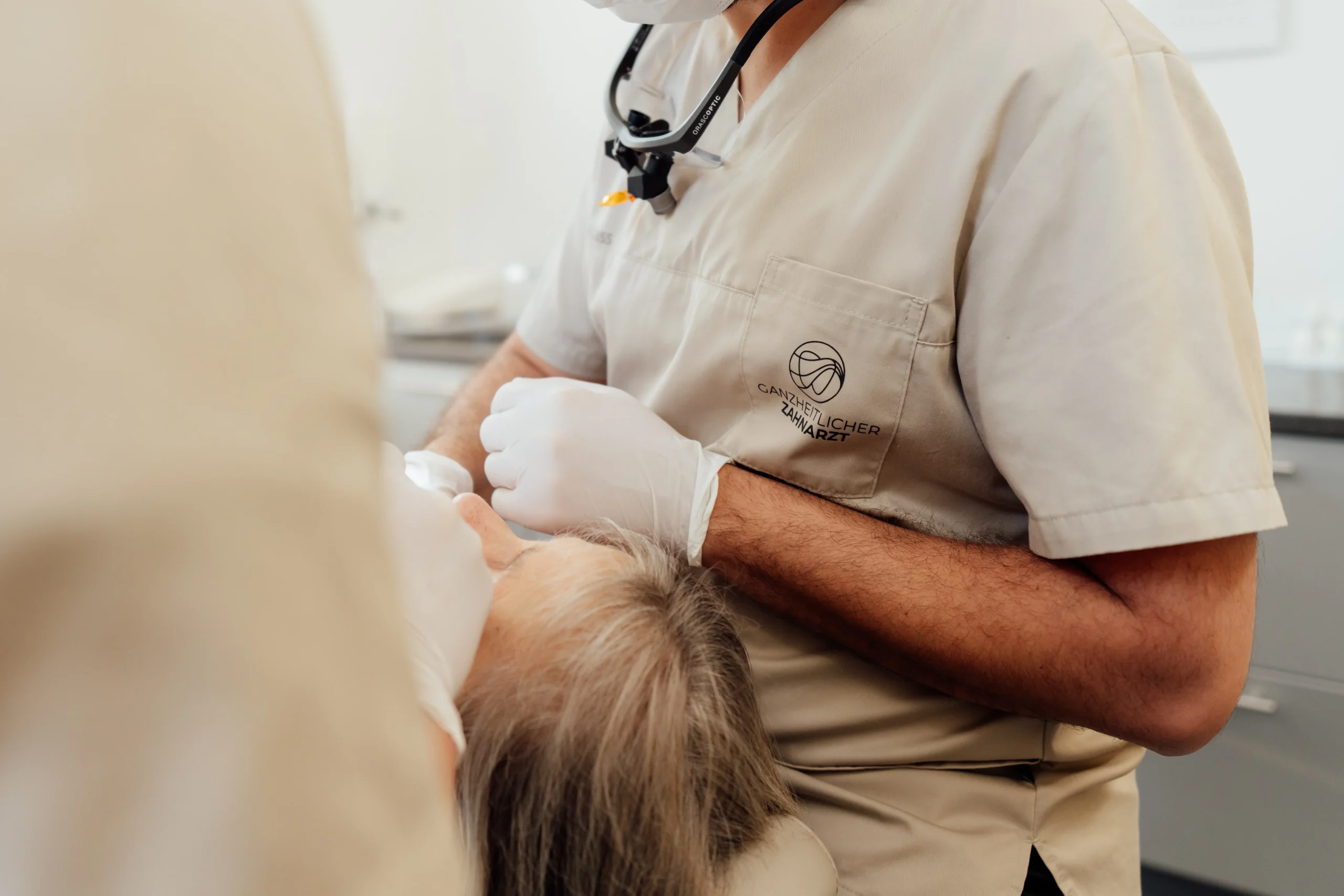
At our practice in Bad Schwartau a 3D scan is never just a picture. The fee covers the imaging itself, a careful interpretation by Dmitri Klass, and a consultation in which we walk you through the findings and your options in plain language - in English if you prefer.
- The CBCT/DVT scan, taken with the smallest justified field of view.
- A professional reading of the images and a written report.
- A consultation to discuss findings, options and next steps with you.
For patients travelling from abroad, we plan the visit so the scan, the interpretation and the consultation happen efficiently - and we explain the findings with you before you travel home. See how we organise this on our page for international patients in Germany.
07 Insurance & reimbursement
Private insurance - and what to check first.
A few honest points on cover, so you can plan with realistic expectations rather than assumptions.
Private (supplementary) insurance
Reimbursement may be possible through a private (supplementary) dental insurance. Please clarify this with your own insurer before the scan.
An itemised invoice
You receive a standard invoice, itemised by service, which you can submit to your insurer yourself.
Public systems
Whether a public health system contributes anything is decided solely by your own insurer or authority; we do not advise on this.
This is general information, not insurance advice; individual cover varies. Please check your own policy before treatment.
08 Related reading
Helpful alongside this cost guide.
3D / CBCT Imaging in Dentistry
The full explainer - how a cone-beam scan is taken, what it reveals and how we read it.
iiTreatment in Germany for International Patients
How visits are organised for patients travelling from abroad.
iiiFDOK / NICO Explained
One of the main reasons a 3D scan is genuinely indicated - assessing hidden jawbone inflammation.
ivCeramic Implants
Where precise 3D planning matters most - metal-free zirconia implants placed with confidence.
09 Questions
Honest answers about 3D scan cost.
There is no single flat price: the fee depends on the field of view and the reason for the scan. In Germany it is calculated under the German fee schedule for doctors (GOÄ). The amount depends mainly on the size of the imaged area, the clinical question and whether a written report or second-opinion interpretation is included - a small, single-tooth field of view costs less than a full upper-and-lower-jaw scan with detailed planning. You receive a written quote before any scan, so you know the cost in advance.
A single-tooth CBCT uses a small field of view around one tooth, its root and the surrounding bone, so it usually sits at the lower end of the fee range for 3D dental scans. In Germany the fee is calculated under the German fee schedule for doctors (GOÄ), and the exact amount depends on your case. You receive a written quote before any scan.
Reimbursement may be possible through a private (supplementary) dental insurance - please clarify this with your own insurer before the scan. You receive a standard invoice, itemised by service. Whether a public health system contributes anything is decided solely by your own insurer or authority; we do not advise on this.
Not always. A 3D scan is justified when the extra information will genuinely change your diagnosis or treatment - for example implant planning, assessing a suspected chronic bone inflammation (FDOK/NICO), evaluating a difficult root, or looking at the jaw joint. For many routine questions a conventional 2D X-ray is enough. Following the ALARA principle (As Low As Reasonably Achievable), we only recommend a 3D scan when it is clinically justified, never as a routine add-on.
CBCT uses X-rays, so it does involve a small radiation dose. Modern cone-beam units allow the field of view and settings to be tailored to the question, which keeps the dose low - generally far below a conventional medical CT of the same region, though higher than a single 2D dental X-ray. Used selectively and only when justified, the diagnostic benefit clearly outweighs the small risk for most patients. We always choose the smallest field and lowest reasonable setting that still answers the clinical question.
For implant planning, usually yes. A CBCT shows bone height, width and density in three dimensions and the exact position of nerves and the sinus floor - information a 2D X-ray cannot fully provide. That precision is what allows a ceramic implant to be placed safely and minimally invasively, and it can reveal issues beforehand that would otherwise only appear during surgery. Seen against the total cost of implant treatment, the scan is a comparatively small part that protects the larger investment.
Yes. English-speaking and international patients are welcome to come for 3D diagnostics and an honest second opinion. Briefly describe your situation in the request form and we get back to you with the next steps. The examination, including a 3D scan where it is justified, takes place at the practice, and we go through the findings with you in person.
A question about your own scan that isn’t answered here? Ask us directly →
This page is general information, not a diagnosis or a treatment promise. Whether a 3D scan is appropriate, and what it will cost, can only be decided for your individual situation in a consultation.
10 Get started
Ask for a written quote for your 3D scan.
Tell us what the scan is for. We reply personally - in English or German - with whether a 3D scan is the right step for you and a written quote before anything is taken.
Practice
Hauptstraße 50
23611 Bad Schwartau
Germany