Biological dentistry · Bad Schwartau, near Lübeck
What is biological dentistry?
A biological dentist is a licensed dentist who chooses materials and methods with the whole body in mind: biocompatible, often metal-free materials, tooth-preserving technique, protective handling of old amalgam and attention to chronic inflammation in teeth and jaw. It is an approach within regular dentistry, not a separate specialty or protected title.
At our practice in Bad Schwartau near Lübeck, it is the foundation everything is built on: care that asks not only what is wrong with a tooth, but how every material and decision fits your overall health.
Phone hours: Mon–Thu 8:30–13:00 (German time)

01 What it is
The mouth is part of the body - so we treat it that way.
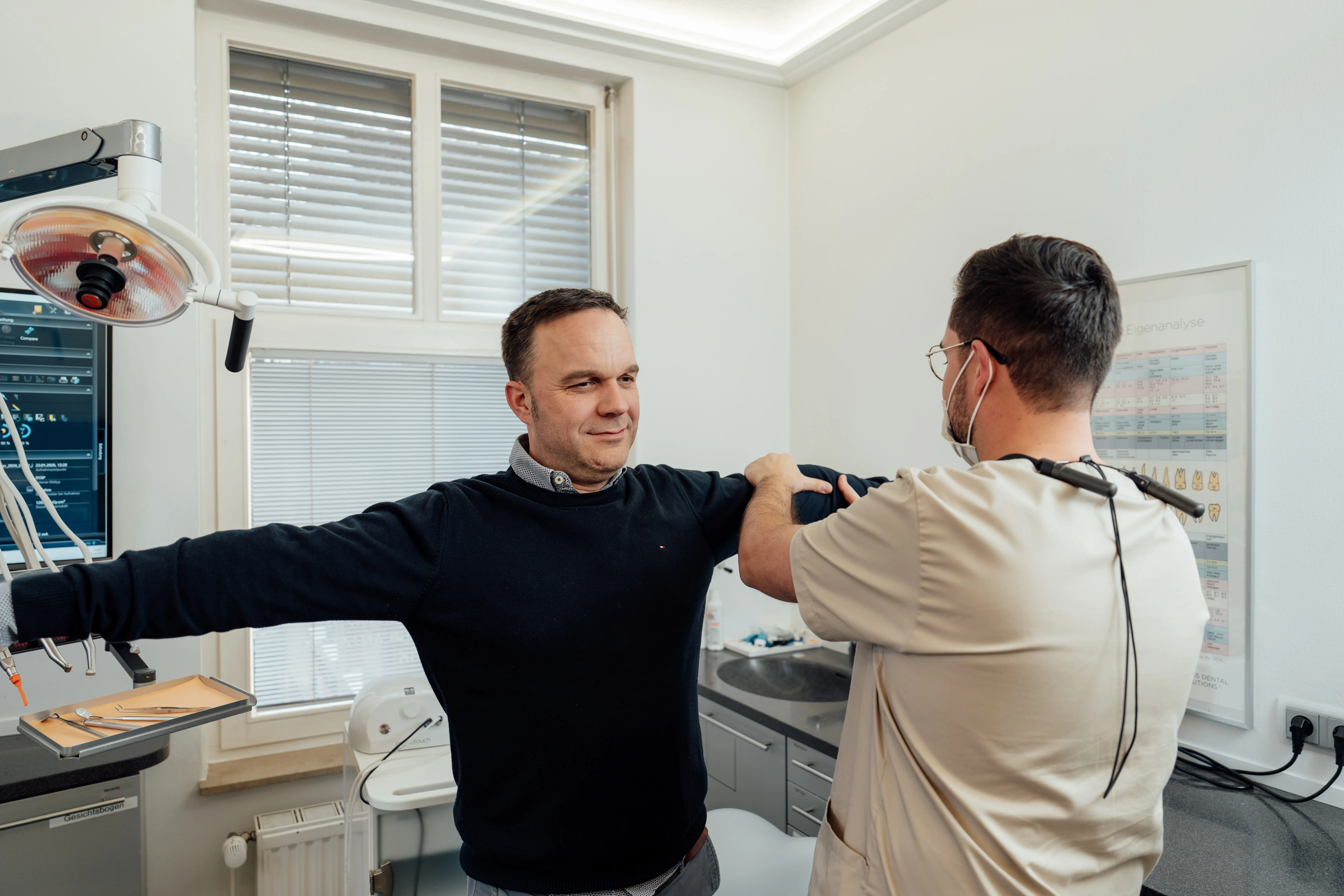
Biological dentistry views the mouth not as an isolated set of teeth, but as a living part of your whole physiology. The materials we place, the procedures we choose and the recommendations we make are all weighed against one question first: how does this serve your overall health?
In practice that means avoiding unnecessary burdens on the immune system, preserving as much of your own healthy tooth structure as possible, and using only materials that are proven to be biocompatible. The goal is not simply to fix teeth - it is to support the body's own capacity to stay well.
- Metal-free, biocompatible materials throughout - no amalgam, no metal alloys.
- Tooth-preserving, minimally invasive technique wherever it is possible.
- Treatment planned around your immune system and whole-body health.
01b The terms
Holistic, biological, integrative, “bio” dentistry – what the terms mean
You will meet several labels for a similar idea. They overlap a great deal; the differences are mostly in emphasis and in where the word is commonly used.
| Term | What it usually means | Typical focus |
|---|---|---|
| Biological dentistry | Choosing dental materials and methods by how well they suit the body as a whole. The term most often used in Germany and continental Europe (“biologische Zahnmedizin”). | Biocompatible, often metal-free materials; protective amalgam removal; assessing chronic inflammation in teeth and jaw; 3D diagnostics where needed. |
| Holistic dentistry | Largely the same philosophy, with more emphasis on the person as a whole. More common in English-speaking countries. | A history that looks beyond the teeth; nutrition, lifestyle and stress; working alongside your doctor or other practitioners. |
| Integrative dentistry | Conventional, evidence-based dentistry as the base, combined with selected complementary approaches where a patient wishes. | Standard diagnostics and treatment first; complementary measures discussed individually as an addition, not a replacement. |
| “Bio” dentistry | An informal short form. Sometimes it means the full biological approach, sometimes only the use of biocompatible materials. | Varies from practice to practice – worth asking what is actually meant. |
Good to know: none of these terms is a protected specialist title. In Germany they describe an approach to care, not an additional qualification – so what counts is how a practice actually works. The checklist further down lists the questions worth asking.
02 The mouth-body connection
What happens in the mouth
does not stay in the mouth.
Chronic oral infections, incompatible materials and hidden inflammations in the jawbone can place a quiet, ongoing burden on the immune system. Biological dentistry takes those connections seriously - and aims to reduce that burden rather than work around it.
03 What guides us
Principles we never compromise.
Every decision in the practice is measured against your whole-body health - not just the tooth in front of us.
- Only biocompatible, metal-free materials - ceramic implants, full-ceramic restorations, no amalgam or metal alloys.
- Minimally invasive technique that preserves healthy, natural tooth structure.
- Protocol-based, protective removal of old amalgam fillings for sensitive patients.
- Careful assessment of how dental work and hidden inflammation may affect the rest of the body.
- Precise 3D / CBCT diagnostics for safer, well-planned, low-radiation treatment.
- Nutrition, lifestyle and immune function considered as part of every treatment plan.
03b Evidence, honestly
What is evidence-based – and what is a traditional model
Biological dentistry is sometimes filed under alternative medicine. In reality it mixes well-supported principles with traditional ideas and with decisions that depend on the individual. You should know which is which.
Principles shared with modern dentistry
- Biocompatibility and material choice – selecting well-tested materials and taking documented allergies or intolerances into account.
- Minimally invasive treatment – preserving as much healthy tooth structure as possible.
- Treating chronic sources of inflammation – for example inflamed gums or infection at a root tip, diagnosed with suitable imaging.
- Gum health and general health – research links periodontitis with conditions such as diabetes and cardiovascular disease. These are associations; treating gum disease is part of good care, not a cure for other illnesses.
Tooth-organ meridian charts
The idea that each tooth corresponds to a particular organ comes from traditional and complementary medicine. It is not scientifically proven, and we do not base a diagnosis on it.
Many patients ask about it, so we explain it openly on our page on the teeth and organs meridian chart – including what it does and does not mean.
Removing intact amalgam fillings
Health authorities do not recommend routinely removing intact, well-functioning amalgam fillings. Where a filling is defective, a patient has a documented sensitivity or simply wants a metal-free mouth, removal is discussed individually.
If fillings do come out, a protective protocol matters – described on our page on safe amalgam removal.
General information, not medical advice. Whether any treatment is suitable for you is discussed individually after an examination.
We don't ask only what is wrong with a tooth - we ask what it asks of the body.
The biological principle, in one sentence
04 In the practice
See it explained in English.
A short film on how biological dentistry shapes the way we plan and carry out treatment.
05 What to expect
From first message to lasting result.
A calm, considered path - every step planned around your health, not a template.
Get in touch
Send your request in English. We reply personally with the next steps and answer your first questions.
Consultation & diagnostics
A thorough assessment of your situation and existing dental work, including precise 3D imaging where it is needed.
A plan made for you
A treatment plan built around your health and goals - using only biocompatible, metal-free materials.
Biological treatment
Careful, tooth-preserving treatment, followed by aftercare that helps the result - and your health - last.
06 Within the biological approach
The treatments this philosophy guides.
Biological dentistry is not a single procedure - it is the principle behind every treatment we offer. These are the building blocks of metal-free, whole-body care.
Ceramic Implants
Metal-free zirconia implants that integrate naturally with bone and tissue - no titanium, no grey shimmer.
02Safe Amalgam Removal
Protective, protocol-based removal of old amalgam fillings to reduce mercury exposure during treatment.
03Metal-Free Restorations
Full-ceramic veneers, crowns and restorations that preserve healthy tooth substance and stay biocompatible.
043D / CBCT Imaging
Precise, low-radiation 3D diagnostics that reveal hidden inflammation and make planning safer.
05Dentosophy
Reading the body, not just the bite - an observational approach that asks what teeth and bite are telling us.
07 Who it is for
Care that listens before it treats.
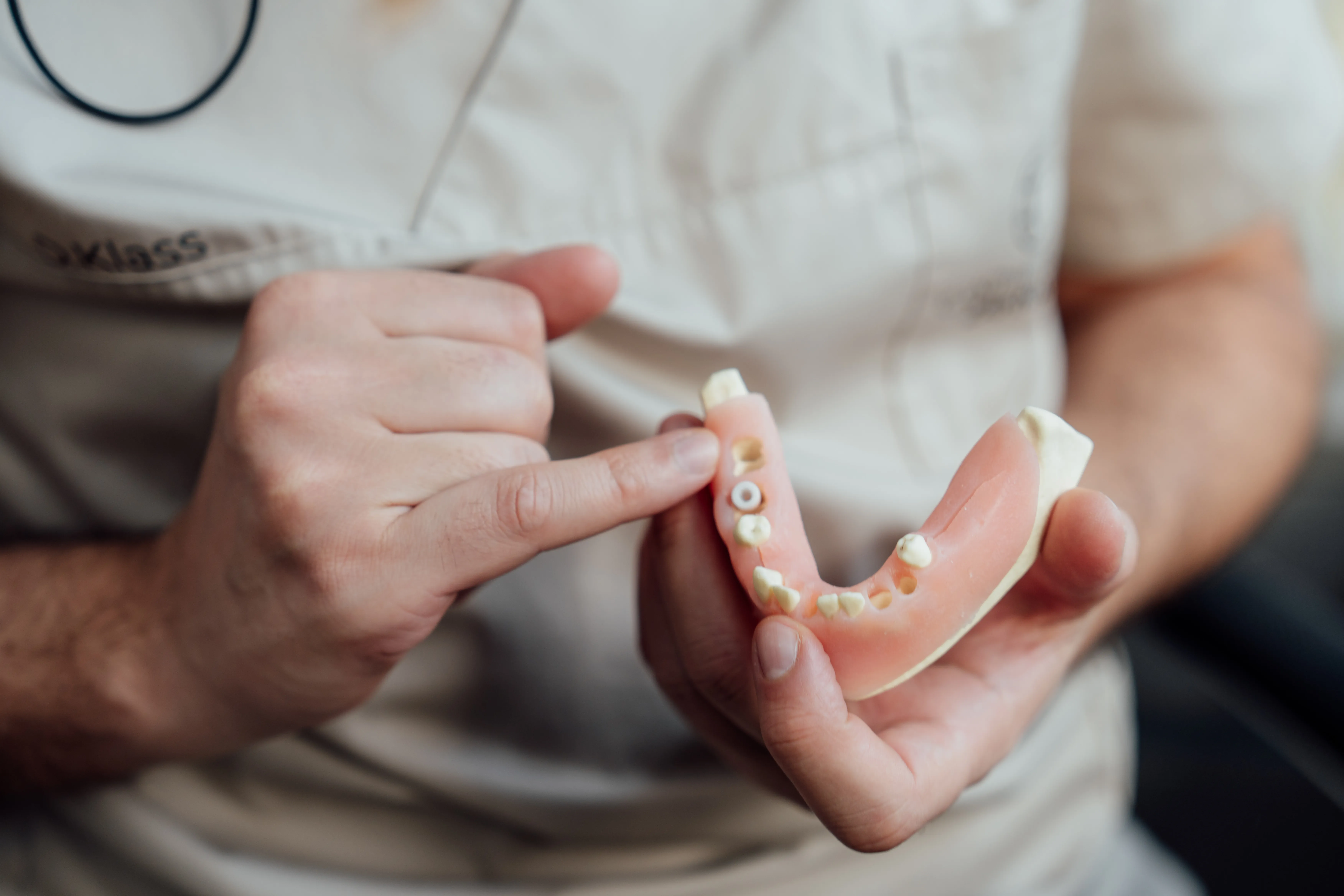
Biological dentistry suits people who want their dental work to align with a natural, health-conscious life - and who would rather understand the cause than only repair the symptom.
It is often the right fit if you have concerns about metal restorations, sensitivities or unexplained health issues you suspect may be linked to dental work, or if you simply prefer treatment that is gentle, considered and metal-free from the start.
Whatever brings you here, you will find a practice that treats you as a whole person - not a set of teeth - and takes the time to understand your individual situation.
07b In practice
What does a biological dentist do?
The philosophy above becomes concrete in how a biological dentist actually works - what is examined, which materials are used and how decisions are made.
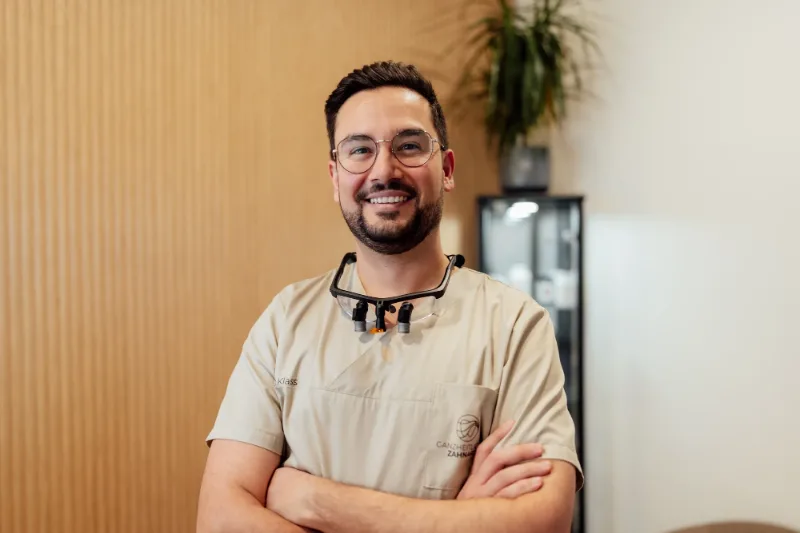
A biological dentist provides the full range of dental care, but chooses methods and materials by one additional standard: how they sit with the rest of the body. At our practice in Bad Schwartau, Dmitri Klass starts with a thorough history that looks beyond the teeth, uses low-radiation 3D / CBCT diagnostics where a flat X-ray cannot answer the question, and plans treatment to preserve as much healthy tooth structure as possible.
In treatment this means biocompatible materials as the rule - metal-free zirconia implants instead of titanium, full-ceramic restorations instead of metal alloys - and protocol-based amalgam removal when old metal fillings have to come out. Consultations are unhurried, in English or German, and every recommendation is explained so you can decide with a clear picture rather than under pressure.
The assessment also looks beyond single teeth. Where the gums are chronically inflamed, biological periodontal therapy often comes before any other step. Jaw pain, clenching or an uneven bite are assessed as part of bite and TMJ therapy, because the jaw joints and muscles work as one system with the teeth. Unclear areas in the jawbone, for example at old extraction sites, are examined in 3D – our page on FDOK / NICO in the jawbone explains what this involves and where the evidence is still debated.
Dmitri Klass is a registered dentist and a member of the Zahnärztekammer Schleswig-Holstein, the regional dental chamber that supervises the profession - so care is delivered within the framework of German professional and hygiene standards.
About Dmitri Klass
07c Choosing a practice
How to choose a biological dentist in Europe
Because the label is not a protected title, the practical questions matter more than the name on the door. Whichever practice you consider – including ours – these points help you compare on substance.
- Licence and chamber membershipIs the dentist licensed in their country and a member of the responsible dental chamber? In Germany every dentist belongs to a regional Zahnärztekammer; our details are in the imprint.
- Honest information on the evidenceDoes the practice explain which methods are well supported and which are traditional models – without promising to cure general illnesses?
- MaterialsWhich materials are used for fillings, crowns and implants, and can you see the manufacturer information?
- Protective protocolsIf amalgam is to be removed: are rubber dam, high-volume suction and a separate air supply part of the routine?
- 3D diagnosticsIs a 3D / CBCT scan available where a flat X-ray cannot answer the question – and used only when it is actually needed?
- A written cost estimateDo you receive an itemised written estimate before treatment starts?
- Language of correspondenceCan you discuss diagnosis, options and aftercare in a language you understand well? With us, correspondence and consultations are in English or German.
08 International patients
English-speaking, and easy to reach.
We regularly welcome patients from across Europe and beyond who are looking for a holistic dentist in Germany - genuinely holistic, metal-free dental care. Consultations and treatment are available in both English and German.
The practice is at Hauptstraße 50 in Bad Schwartau, a short distance from Lübeck and well connected to Hamburg Airport - so travelling for treatment is as straightforward as possible.
Most treatments are planned to fit your journey, often within one or two coordinated visits. Where it helps, a first consultation can frequently be held remotely - by phone or video - so we can discuss your situation and options before you commit to any travel.
After an examination you receive a clear written treatment plan together with an individual, itemised written cost estimate, so the proposed steps are set out before you decide to go ahead. Reimbursement may be possible through a private (supplementary) dental insurance - please clarify this with your own insurer in advance. You receive a standard invoice, itemised by service. Whether a public health system contributes anything is decided solely by your own insurer or authority; we do not advise on this.
09 Questions
Good to know about biological dentistry.
Biological dentistry treats the mouth as part of the whole body. Every material and procedure is chosen for how it serves your overall health - favouring metal-free, biocompatible materials, tooth-preserving technique, careful amalgam removal and precise 3D diagnostics.
A biological dentist is a licensed dentist who chooses materials and methods with the whole body in mind: biocompatible, often metal-free materials, tooth-preserving technique, protective handling of old amalgam and attention to chronic inflammation in teeth and jaw. It is an approach within regular dentistry, not a separate specialty or protected title.
The terms overlap a great deal. Biological dentistry is the term most used in Germany and continental Europe and centres on biocompatible materials and the whole-body view. Integrative dentistry usually means conventional, evidence-based dentistry combined with selected complementary approaches. Holistic dentistry is largely the same idea with more emphasis on the person as a whole. None of these is a protected specialist title, so it is worth asking any practice how it actually works – see the table of terms on this page.
Conventional dentistry focuses on repairing the tooth in front of it. Biological dentistry also asks why the damage occurred, how a material or hidden infection might affect the rest of the body, and how to treat with the least burden - preserving healthy structure and avoiding materials the body has to fight.
Yes. We work with ceramic (zirconia) implants and full-ceramic restorations rather than titanium or metal alloys. They are strong, integrate well with bone and tissue, and avoid the grey shimmer and metal exposure many patients prefer to avoid. You can read more on our ceramic implants page.
Yes. The practice welcomes English-speaking and international patients, and consultations and treatment can be carried out in English. We are at Hauptstraße 50 in Bad Schwartau, a short distance from Lübeck and well connected to Hamburg Airport.
Look at how the practice actually works rather than at labels alone: does it offer genuinely metal-free restorations and ceramic implants, protocol-based amalgam removal, 3D diagnostics and time for a proper history? Those are the practical marks of a biological dentist. Our practice near Lübeck works exactly this way and treats patients in English and German - and because biological dentistry is not a protected specialty title in Germany, asking these concrete questions is the most reliable filter wherever you search. Our checklist How to choose a biological dentist in Europe on this page lists them in full.
Use the request form on this page or email info@ganzheitlicher-zahnarzt.de. Tell us a little about your situation and the treatment you are interested in, and we will reply personally with the next steps.
A question about your own situation that is not answered here? Ask us directly →
10 Related reading
Read more on the whole-body connections.
Calm, evidence-aware writing on how the mouth and the rest of the body are linked.
Teeth and organs: the tooth-meridian chart
The traditional tooth-organ correspondence chart laid out clearly - and what it does and does not mean.
iiTeeth and the immune system
How chronic oral inflammation and hidden sites can burden the immune system - the documented oral-systemic connection, explained responsibly.
iiiWhy you still get cavities despite good brushing
Brushing and flossing well but still getting cavities? The real factors - saliva, microbiome, diet and micronutrients.
11 Get started
Request your appointment.
Tell us about your situation. We reply personally - in English - with the next steps.
Practice
Hauptstraße 50
23611 Bad Schwartau
Germany
Dental care that respects the body it lives in.
Tell us about your situation. We reply personally - in English - with the next steps.
Phone hours: Mon–Thu 8:30–13:00 (German time)