01 Biological Oral Surgery
Biological wisdom tooth extraction.
Gentle, 3D-planned removal of wisdom teeth - with thorough socket care and PRF healing support from your own blood, to protect the bone and help avoid NICO and cavitations later in life.
02 What it is
More than pulling a tooth - caring for the socket.
Wisdom tooth removal is one of the most common procedures in all of dentistry. But how it is done matters enormously - because the wisdom-tooth region is where chronic bone problems most often begin years later.
A biological extraction treats the whole site, not just the tooth. The surgery is planned in three dimensions, carried out as gently as the anatomy allows, and finished with a thorough cleaning of the socket and PRF support so the bone has the best possible chance to heal completely the first time.
- 3D / CBCT planning of nerve, sinus and root anatomy before any incision.
- Minimally invasive technique - preserving bone and soft tissue.
- Thorough cleaning of the socket and the tooth's ligament remnants.
- PRF from your own blood placed in the socket to support healing.
03 Why it matters
A socket that heals well
protects you for decades.
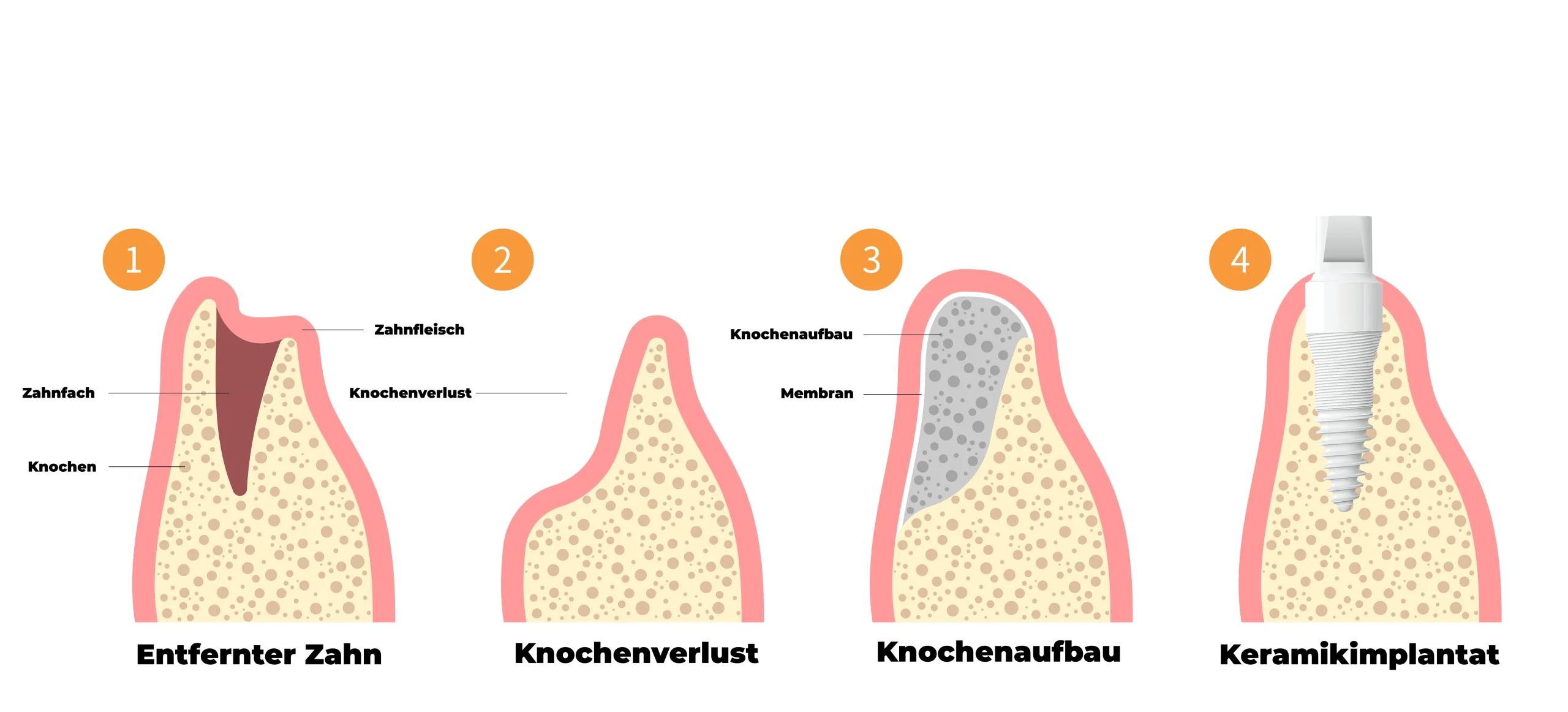
Most chronically inflamed jaw lesions - NICO, cavitations, FDOK - trace back to old extraction sites that never healed completely. The few extra minutes spent cleaning and supporting a socket are an investment in the bone you keep for life.
04 NICO & cavitations
Helping the body avoid a hidden problem.
Prevention begins in the socket - a few careful minutes today protect the jaw for decades.
The biological principle
NICO - also called a cavitation, or in German FDOK - describes an area of poorly healed, chronically inflamed, fatty-degenerative bone inside the jaw. It most often forms in old wisdom-tooth sites where the socket did not regenerate fully.
These lesions can sit silently for years. A biological extraction is designed to reduce the chance of one forming in the first place: by removing all inflamed tissue and ligament remnants, and by supporting the socket with PRF so it fills with healthy bone rather than a quiet, chronic burden.
If you suspect an existing problem in an old extraction site, that is a separate diagnosis and treatment. Read about FDOK / NICO treatment
05 What to expect
From first scan to settled healing.
3D assessment
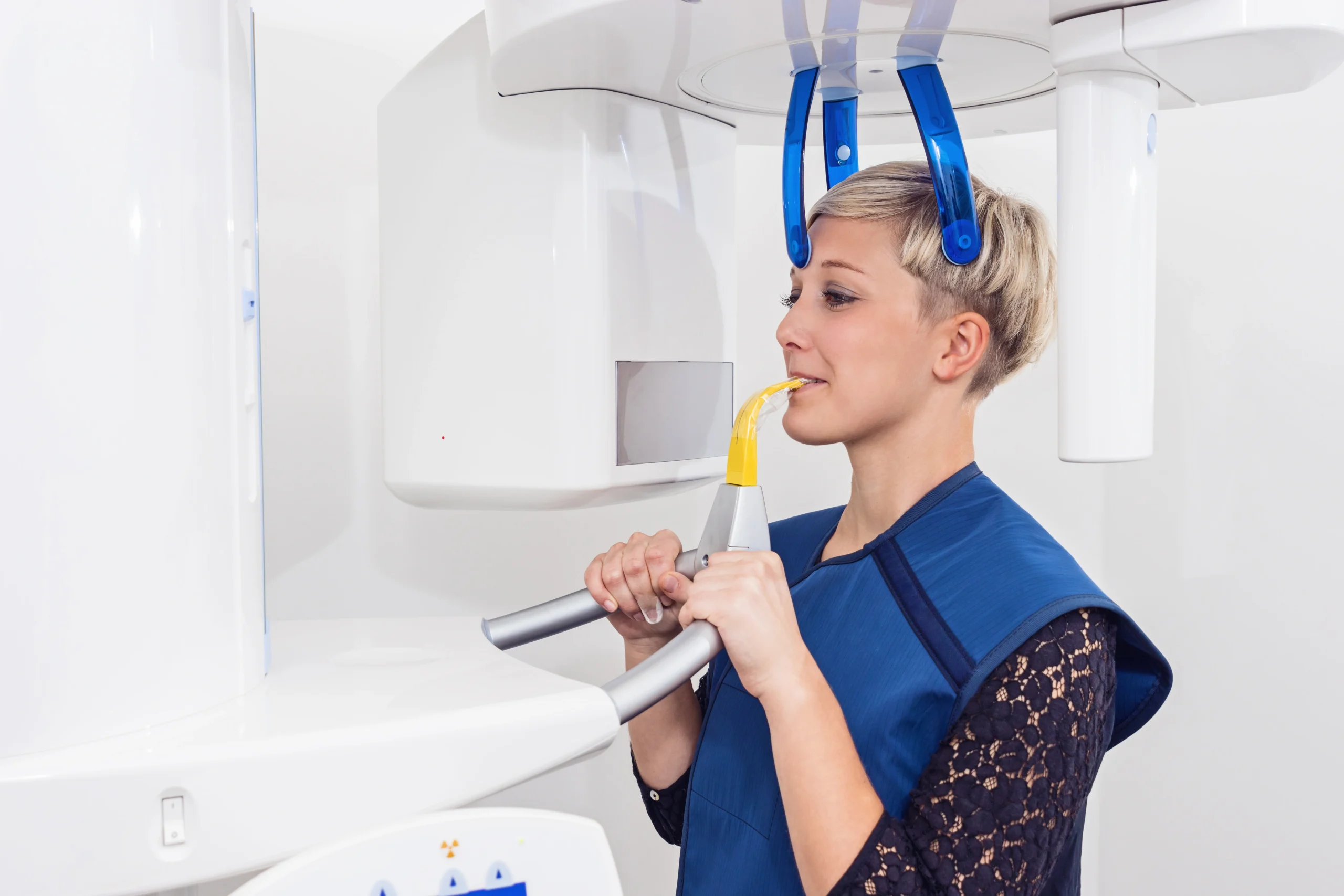
A consultation and, where indicated, a low-radiation 3D scan to map the tooth against nerve, sinus and neighbouring roots.
Gentle removal
Under local anaesthetic, the tooth is removed with the most conservative access the anatomy allows - preserving bone and tissue.
Clean & support
The socket is thoroughly cleaned of inflamed tissue and ligament remnants, then supported with PRF made from your own blood.
Calm aftercare
Individual aftercare guidance and a follow-up review, so the site settles cleanly and comfortably.
06 Who it is for
When a gentle, biological approach makes sense.
Not every wisdom tooth needs to come out - a healthy, cleanable tooth can often simply be monitored. When removal is the right call, a biological approach is especially worthwhile for patients who care about long-term bone health.
- Impacted or repeatedly inflamed wisdom teeth that need removing.
- Patients who want to minimise the risk of later NICO / cavitations.
- Anyone preferring metal-free, biocompatible, whole-body-minded care.
- International and English-speaking patients near Lübeck and Bad Schwartau.
07 Related care
Part of a whole-body approach.
Biological wisdom-tooth surgery sits within our wider biological dentistry. Explore the treatments it connects to.
Biological Dentistry
The whole-body philosophy behind every treatment we plan - the pillar this surgery belongs to.
02FDOK / NICO Treatment
Diagnosing and treating existing areas of chronically inflamed, fatty-degenerative jaw bone.
033D / CBCT Imaging
Low-radiation 3D diagnostics that map nerve and root anatomy before surgery.
04Ceramic Implants
Metal-free zirconia implants - should a missing tooth later need replacing.
08 Questions
Wisdom tooth removal, answered.
A biological extraction treats the socket - not only the tooth. We plan the surgery on 3D imaging, work as gently and conservatively as possible, thoroughly clean the socket of any inflamed tissue and remnants of the tooth's ligament, and place PRF (platelet-rich fibrin) made from your own blood to support clean, well-formed healing. The aim is a socket that fully regenerates with healthy bone, rather than leaving a poorly healed, chronically inflamed area.
NICO (also called cavitations or FDOK) describes areas of poorly healed, chronically inflamed, fatty-degenerative jaw bone that can form after an extraction - most commonly in old wisdom-tooth sites. By cleaning the socket thoroughly and supporting it with PRF, a biological extraction aims to give the bone the best possible chance to heal completely the first time, reducing the likelihood of such a chronic lesion forming later.
PRF stands for platelet-rich fibrin. A small sample of your own blood is spun in a centrifuge to concentrate platelets and growth factors into a natural fibrin matrix. Placed into the socket, this autologous (your-own-body) material supports the early phases of wound healing and helps stabilise the blood clot - without any synthetic additive.
Wisdom teeth often sit close to the inferior alveolar nerve or the maxillary sinus and can have curved or unusual roots. A low-radiation 3D / CBCT scan maps this anatomy precisely, so the surgery can be planned for the most conservative access and the lowest risk to the nerve and neighbouring structures.
The extraction itself is carried out under local anaesthetic, so it is not painful during treatment. Recovery varies from person to person depending on the position and complexity of the tooth. A minimally invasive, PRF-supported approach is designed to keep swelling and discomfort to a minimum. You will receive clear, individual aftercare guidance and a follow-up review.
Not necessarily. A healthy, fully erupted wisdom tooth that can be cleaned and is not causing problems can often be kept and simply monitored. Removal is considered when a tooth is impacted, repeatedly inflamed, damaging a neighbour, or otherwise a clear risk. We assess each tooth individually and only recommend extraction when there is a sound reason.
Considering wisdom tooth removal? Let's do it gently.
Tell us about your situation. We reply personally - in English - with the next steps.
Request an appointment