01 Biocompatible dentistry
Metal-free restorations for sensitive patients.
Full-ceramic crowns, inlays, onlays and bridges for patients with allergies, material sensitivities or a simple preference for a mouth free of metal - planned around your body, near Lübeck.
Phone hours: Mon–Thu 8:30–13:00 (German time)
02 What it is
Restoring teeth without a trace of metal.
A metal-free restoration replaces damaged or missing tooth structure using only full-ceramic materials - with no amalgam, no gold or non-precious alloys, and no metal core hidden beneath the porcelain. For sensitive and allergy-prone patients, that absence of metal is the point: there is simply nothing metallic in the mouth to react to.
We use two principal ceramics, chosen to suit each tooth. Zirconia is exceptionally strong and ideal for crowns and bridges in the load-bearing back of the mouth. Lithium disilicate is prized for its lifelike translucency and is well suited to inlays, onlays, veneers and visible front teeth. Both are biologically inert and contain no metal whatsoever.
- Full-ceramic crowns, inlays, onlays, bridges and veneers - metal-free by design.
- No amalgam, no alloy substructures, no grey margin at the gum line.
- Strength matched to each tooth: zirconia for load, lithium disilicate for light.
Zirconia
The strong one
A high-strength ceramic that withstands the heavy chewing forces at the back of the mouth - our first choice where durability leads.
- Best for
- Crowns & bridges
- Strength
- Very high
- Position
- Molars, load-bearing
- Metal
- None
Lithium disilicate
The lifelike one
A glass-ceramic prized for the way it transmits light, used where translucency and a seamless match to your own enamel matter most.
- Best for
- Inlays, onlays, veneers
- Strength
- High
- Position
- Front & visible teeth
- Metal
- None

03 Why it matters
What you put in the mouth,
the whole body lives with.
Different metals sitting together in a moist mouth can form tiny electrical currents and release trace ions over years of chewing. For a sensitive or allergy-prone patient, removing metal removes that variable entirely - which is exactly why biological dentistry treats material choice as a health decision, not just a technical one.
04 The benefits
Kind to the body, kind to the eye.
The advantages of going metal-free are felt on two levels - biological and aesthetic - and for the patients who come to us, both matter.
- No metal exposure. Nothing metallic to corrode, release ions or trigger a contact reaction.
- No galvanic currents. Removing dissimilar metals removes the small currents they can create together.
- Lifelike appearance. Ceramic handles light like enamel - no dark edges, no grey shadow.
- Gum-friendly. Ceramic margins are well tolerated by soft tissue and resist plaque adhesion.
- Tooth-preserving. Modern bonded ceramics let us conserve more of your healthy tooth.
05 Who it is for
Patients who come to us for metal-free care.
Metal-free restorations are not only for those with a diagnosed allergy. They suit anyone who would rather their dental work were as biologically quiet as possible.
Sensitive & allergy-prone patients
People with a known or suspected sensitivity to dental metals, or who react to other metals in daily life.
02Anyone replacing old amalgam or metal work
Patients who want existing amalgam or metal-supported restorations exchanged for full-ceramic alternatives.
03Patients seeking a fully metal-free mouth
Those pairing ceramic restorations with ceramic implants for a consistently titanium-free, metal-free result.
04Aesthetically demanding patients
People who want restorations and veneers that disappear into a natural smile, with no grey at the gum line.
06 What to expect
From first consultation to a finished restoration.
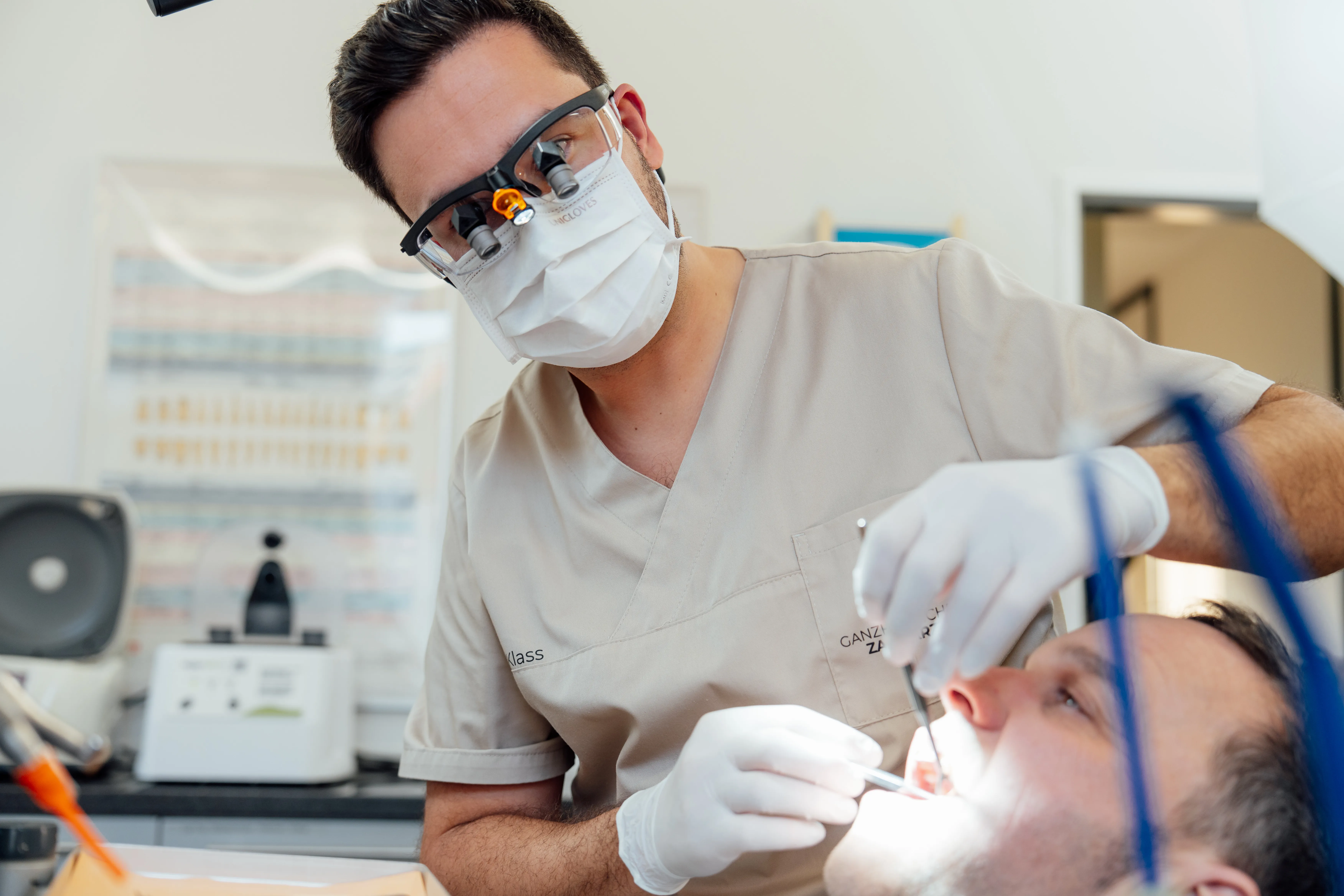
Consultation & assessment
We talk through your history and sensitivities, examine the teeth, and - where it helps - arrange biocompatibility assessment before deciding on materials.
Gentle preparation
Old metal or amalgam is removed where needed, and the tooth is prepared conservatively to keep as much healthy structure as possible.
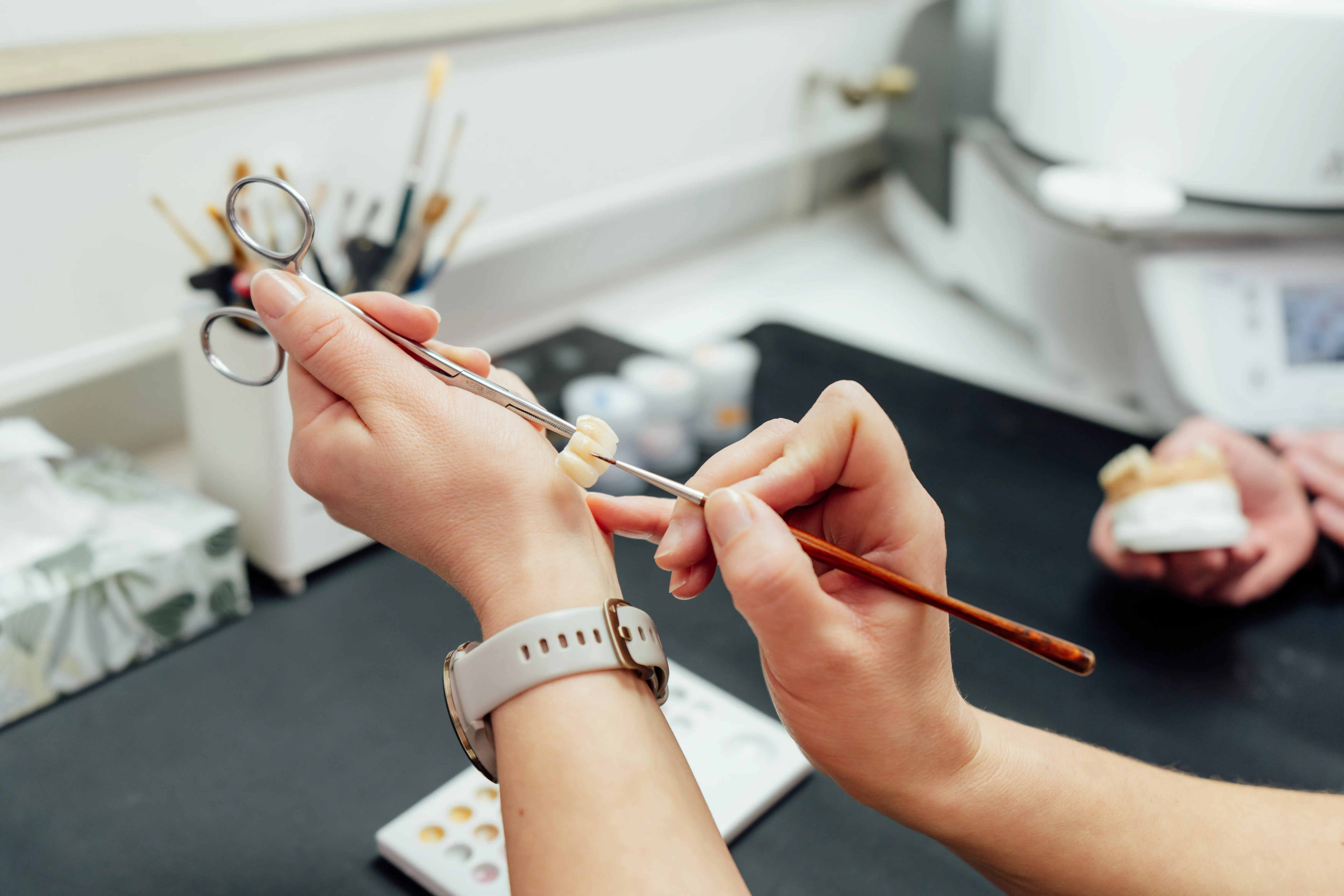
Precision & lab work
A precise digital or conventional impression goes to a laboratory specialised in metal-free prosthetics, where your ceramic restoration is crafted to fit.
Bonding & aftercare
The finished ceramic is adhesively bonded into place, the bite is checked, and we give you simple guidance to keep the result healthy for years.
For a sensitive patient, the cleanest material is often the one that simply isn't there - no metal to corrode, react or shadow the smile.
07 Going further
Replacing what is already there.
Many patients arrive wanting their existing amalgam or metal fillings exchanged for ceramic. Amalgam is removed under a careful protective protocol designed to limit exposure during the procedure - and metal-free care extends naturally across our wider practice.
Wondering how supportive measures around amalgam removal are approached? Our page on detox concepts in biological dentistry explains what is discussed and how each step is decided individually.
08 Questions
Metal-free restorations - answered.
It means restoring teeth without any metal in the mouth - no amalgam, no gold or non-precious alloys, and no metal substructures under crowns and bridges. Instead we use full-ceramic materials such as zirconia and lithium disilicate, which are ceramics rather than metal alloys: they do not corrode and do not conduct electricity in the mouth.
Yes. High-strength zirconia is one of the most durable restorative materials in dentistry and is well suited to molars and bridges where chewing forces are highest. Lithium disilicate is used where translucency matters most, such as front teeth, inlays and onlays. Material choice is matched to the position and load of each tooth.
Removing metal from the mouth eliminates one possible source of contact with metals and of galvanic currents between different alloys. For patients with a known or suspected sensitivity we can also arrange biocompatibility assessment before treatment. We do not diagnose allergies ourselves and work together with your physician where medical evaluation is needed.
Ceramic transmits and scatters light much like natural enamel, so there is no dark metal edge at the gum line and no grey shimmer through the tooth. Well-made full-ceramic crowns and veneers are difficult to distinguish from your own teeth.
Yes. Existing amalgam and metal-supported restorations can be removed and replaced with full-ceramic alternatives. Amalgam in particular is removed under a protective protocol to limit exposure during the procedure. See our amalgam removal page for the full approach.
Well-made full-ceramic crowns and inlays are strong, stable restorations that can serve for many years with good care. Modern zirconia and lithium disilicate resist wear and hold their appearance without the grey shadowing that metal can cause over time. As with any restoration, no exact lifespan can be promised - longevity depends on your bite, grinding or clenching habits, day-to-day oral hygiene and regular check-ups. We talk through what helps a result last as long as possible for your individual situation.
Every mouth is different, so we do not quote a flat price. After an examination and a talk about your goals and sensitivities, you receive an individual written itemised estimate setting out the planned steps and materials before anything begins - so you can decide with a clear picture. Reimbursement may be possible through a private (supplementary) dental insurance - please clarify this with your own insurer in advance. We issue a standard invoice, itemised by individual service.
A mouth without metal, planned around your body.
Tell us about your sensitivities and what you would like restored. We reply personally - in English - with the next steps.
Phone hours: Mon–Thu 8:30–13:00 (German time)