01 Biological dentistry · Explainer
Teeth and the immune system: the oral-systemic link.
Your mouth is not sealed off from the rest of you. Gums, teeth and jawbone share a constant traffic of bacteria and immune signals with the whole body - and chronic inflammation in the mouth quietly adds to the load your immune system carries. Here is a calm, evidence-aware look at what is well documented, what is still a model, and what you can actually do about it.
02 The mouth as a gateway
One connected system, not a sealed compartment.
It is easy to think of teeth as small, self-contained structures - but each tooth is anchored in living bone, wrapped in well-supplied gum tissue, and richly served by blood vessels and nerves. The mouth is one of the most densely colonised surfaces in the body, home to hundreds of bacterial species. When that environment is healthy and balanced, the immune system manages it effortlessly in the background.
The “oral-systemic link” is simply the recognition that this gateway works in both directions. What happens at the gum line and around the roots does not stay neatly in the mouth: bacteria and the inflammatory molecules they provoke can enter the bloodstream and reach the rest of the body. This is the evidence-strong companion to the more traditional, interpretive models in biological dentistry - and it is where the science is clearest.
That clarity matters. It lets us separate what is genuinely well documented - the connection between gum inflammation and the body - from the questions that remain open and should be framed as models rather than facts. Both have a place; they are not the same thing.
It also changes how we think about prevention. If the mouth can add to the body's inflammatory burden, then keeping it healthy is not only about saving teeth or comfortable chewing - it is a small but genuine investment in how easily your immune system can do its work everywhere else. That is a quietly empowering idea, and it sits at the heart of biological dentistry.
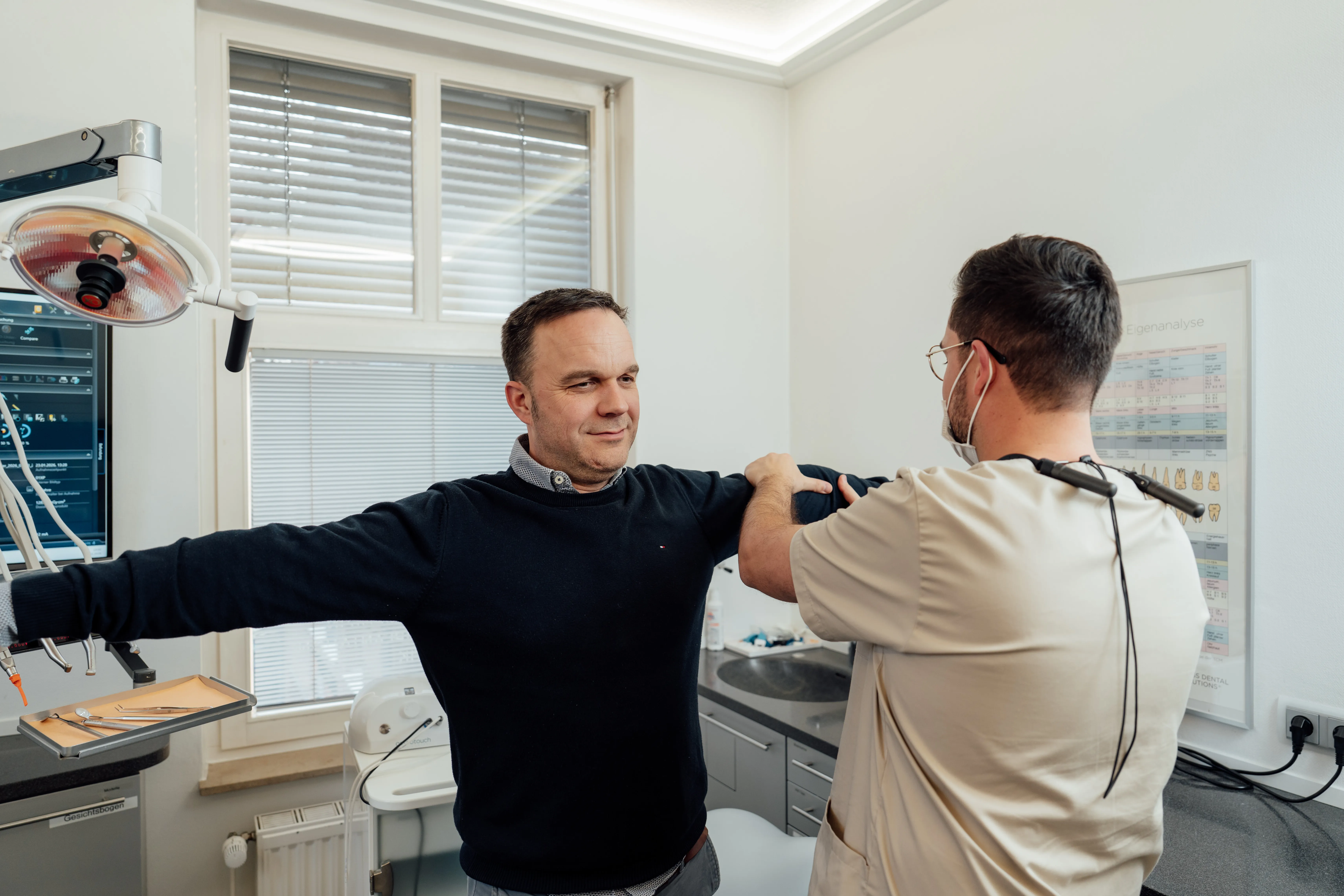

03 Our position
Lower the load -
without overstating it.
We treat the mouth as part of the whole person, and we take the inflammatory load seriously. We also refuse to promise that dentistry cures distant illness. The honest, useful goal is to reduce chronic inflammation at its dental source.
04 Inflammation & immune load
How chronic oral inflammation reaches the body.
Periodontitis - chronic inflammation of the tissue around the teeth - is the clearest example. It is common, often painless, and keeps the immune system mildly but constantly engaged. Because it rarely hurts in its early stages, many people carry it for years without realising the load it adds.
A persistent bacterial burden
Deep gum pockets harbour bacterial biofilm the immune system cannot fully clear. The result is a low-grade infection that simmers month after month rather than resolving.
Inflammatory mediators
Inflamed gum tissue releases messenger molecules - and bacteria can enter the bloodstream. Studies have linked periodontitis with raised inflammatory markers measured elsewhere in the body.
An added systemic load
Research associates periodontitis with conditions such as type 2 diabetes and cardiovascular disease. These are associations, not proof of cause - but the extra demand on the immune system is real.
This is a measured summary of a large body of research, not a diagnosis or a claim that gum disease causes specific illnesses. The relationship is best understood as the mouth contributing to your overall inflammatory load - which is exactly why keeping it healthy is worthwhile. See how we treat gum disease biologically.
The mouth does not cause every illness - but a chronically inflamed mouth quietly raises the load the whole body has to carry.
Dmitri Klass · Biological dentistry, Bad Schwartau
05 Hidden sources
Quieter sites worth understanding.
Beyond the gums, biological dentistry pays attention to a few sites that can act as ongoing, low-key immune stimuli. Some of this is well established; some is a model still under discussion. We label which is which.
Root-canal-treated teeth
A non-vital tooth has no living blood supply, and bacteria can persist in its fine dentinal tubules. Often harmless - but worth assessing case by case, especially under immune strain. Our holistic view on root canals.
Jawbone sites (FDOK / NICO)
Some practitioners describe areas of poorly healed bone after old extractions as chronic irritation fields. This is a debated model, not settled fact, and we treat it as such. FDOK / NICO explained.
Old metal restorations
Older metal and amalgam fillings are tolerated by most people, but a minority react to specific metals. For sensitive patients, biocompatible materials remove that variable. Protective amalgam removal.
How to read this: we mark “documented” concerns separately from “model” concerns on purpose. A model is a useful lens for asking questions and planning diagnostics - it is not a verdict, and it is never grounds for removing a healthy, symptom-free tooth.
06 Materials & biocompatibility
What we place in the mouth, and why it matters.
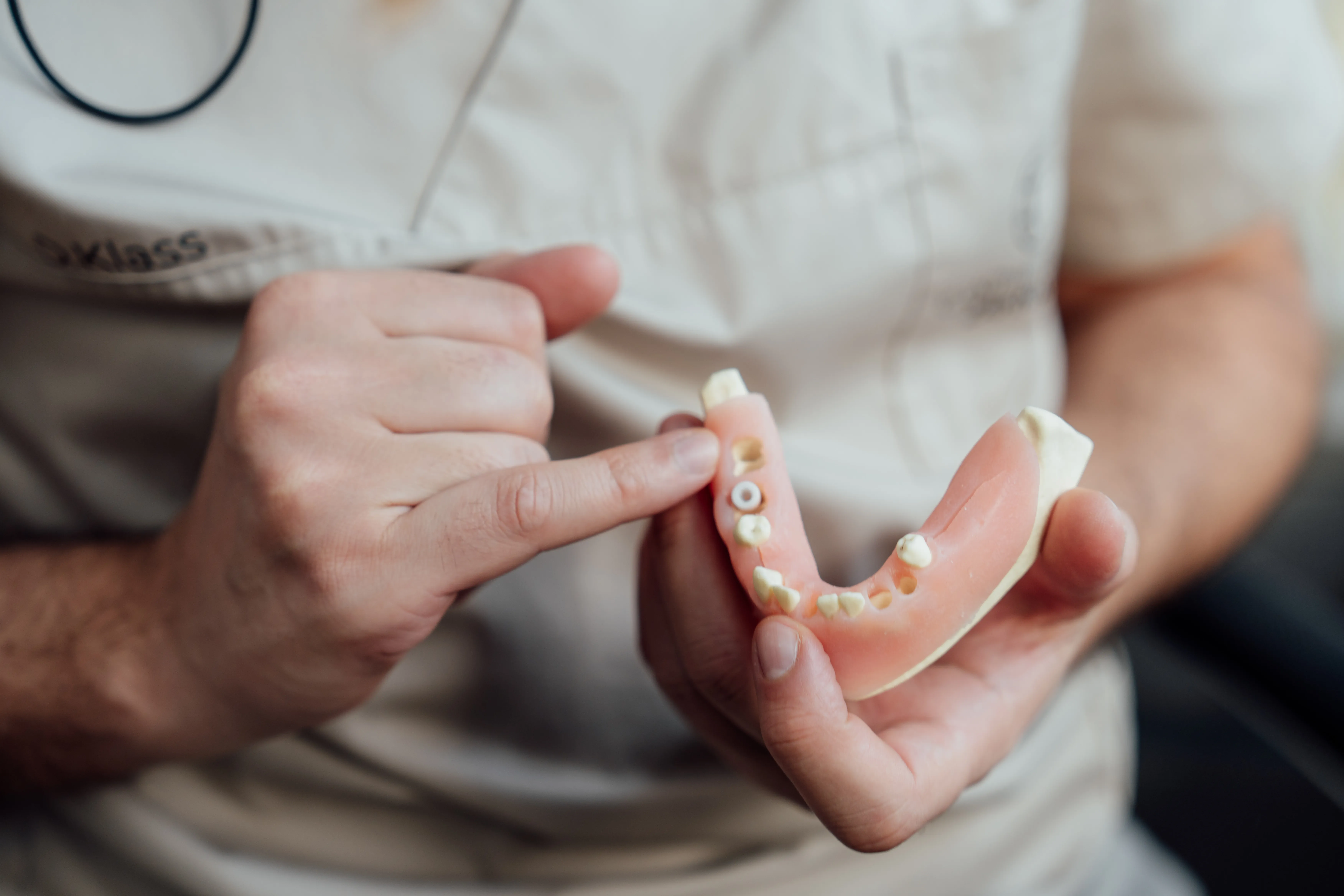
Every filling, crown or implant sits in the body for years and is in constant contact with living tissue. For most patients, standard materials cause no trouble at all. But for sensitive patients - and for anyone who simply prefers to keep their physiology as uncomplicated as possible - the choice of material is part of the immune picture, not an afterthought.
- Metal-free, biocompatible restorations remove metal sensitivity as a variable.
- Ceramic (zirconia) implants avoid titanium for patients who want a metal-free jaw.
- Material choice is made individually - not as a one-size-fits-all rule.
- Where it helps, older metal fillings can be removed with a careful, protective protocol.
Biocompatibility is not a slogan here; it is a practical filter. For a patient with a known sensitivity, an unexplained recurring symptom, or simply a strong preference, choosing well-tolerated ceramics and composites removes one more thing the body has to negotiate. For everyone else it is reassurance - modern, durable materials that look natural and keep the whole picture clean.
07 The traditional view, in context
The tooth-meridian model - a lens, not a proof.
Alongside the evidence-strong oral-systemic science sits an older, interpretive tradition: the tooth-meridian model, which proposes correspondences between individual teeth and other organs and tissues. We mention it honestly and keep it clearly separate from the documented inflammation story above.
It is a traditional lens that some patients find meaningful and that can prompt useful questions - but it is not an established physiological mechanism, and we never present it as one. If you are curious how it is laid out, you can explore it as exactly that: a model.
A traditional model can guide where we look and what we ask. It does not replace diagnosis, and on its own it is never a reason to treat a healthy tooth. See the tooth-meridian chart (as an interpretive model). Many readers arrive here asking which tooth is connected to the heart - the honest answer, with its limits, is in that chart.

08 What you can do
Practical ways to lower the load.
None of this is dramatic. It is steady, well-founded care that reduces chronic inflammation at its source - the most reliable contribution dentistry can make to whole-body health.
Treat gum disease
Biological periodontal therapy calms inflamed gums and clears the chronic infection that keeps the immune system engaged.
Resolve chronic infection
Where 3D imaging shows a genuine, ongoing source of infection, we address it - carefully and only when the findings justify it.
Biocompatible materials
Metal-free, well-tolerated materials remove unnecessary variables for sensitive patients and keep the picture simple.
Preventive check-ups
Regular, thorough reviews catch low-grade problems early - before they become a quiet, long-running load.
09 Related reading
Go deeper on the connections.
Biological Dentistry
The whole-body approach this article grows out of - materials and methods chosen for your physiology.
iiRoot Canals - A Holistic Perspective
How we weigh non-vital teeth tooth by tooth, without fear and without blanket reassurance.
iiiFDOK / NICO Explained
The contested jawbone model - described honestly as a model, with how we actually diagnose and decide.
ivDetox Concepts in Biological Dentistry
What “supporting the body” around treatment can and cannot mean - framed responsibly, not as a cure.
vTeeth & Organs - Tooth-Meridian Chart
The traditional correspondence model laid out as an interpretive lens, clearly flagged as such.
viAll Articles
More calm, evidence-aware reading on holistic, metal-free dentistry from the practice in Bad Schwartau.
10 Questions
Honest answers on teeth and immunity.
Yes - this is one of the better-documented areas of dental medicine. Periodontitis is a chronic inflammation of the tissue around your teeth, and it keeps the immune system mildly but persistently activated. Research has linked periodontitis with raised inflammatory markers in the blood and with conditions such as type 2 diabetes and cardiovascular disease. These are associations rather than proof that gum disease causes those illnesses, but the inflammatory load is real, and treating gum disease is one of the most worthwhile things you can do for your whole-body health.
It can in some cases, but this is not automatic and should not cause panic. A root-treated tooth is no longer vital, so the immune system no longer circulates through it as before, and bacteria can sometimes persist in the fine dentinal tubules. Whether that creates a meaningful burden depends on the individual - the tooth, the quality of the treatment and your immune situation. A well-sealed, symptom-free tooth that looks healthy on a 3D scan often needs no action at all. We assess each tooth individually rather than removing teeth on theory alone.
A chronic oral infection is a continuous source of bacteria and inflammatory mediators that the immune system has to manage, and these can enter the bloodstream. Scientific reviews describe associations between oral infection and systemic inflammation, but the honest framing is that the mouth contributes to the body's overall inflammatory load rather than being the single cause of any distant disease. Reducing chronic infection in the mouth lowers that load - which is a sensible, evidence-aware goal in its own right.
Most people tolerate dental metals without any problem. A minority of patients, however, react to specific metals, and some prefer to avoid them altogether for peace of mind. This is why biocompatible, metal-free materials matter for sensitive patients. We choose materials individually and, where it helps, can take a careful, protective approach to removing and replacing older metal restorations.
By removing sources of chronic inflammation. Healthy gums, a clean and well-managed bite, biocompatible materials and the absence of ongoing low-grade infection all reduce the demands placed on your immune system. We cannot promise that dental care will resolve a systemic illness - and we never would - but lowering chronic inflammatory load in the mouth is a reasonable, well-founded contribution to overall health.
This article is general information, not medical advice or a promise of any particular health outcome. Interpretive models such as meridians and jawbone interference fields are described as models, not proven mechanisms. Any decision about your teeth is made individually, in consultation, on the basis of clinical findings.
Want your mouth assessed as part of the whole picture?
Tell us your situation - in English. We reply personally with a calm, evidence-aware view and your real options, with no pressure and no scare stories.
Request an appointment