Ceramic Implants · For patients from Copenhagen
Ceramic Implants in Germany for Patients from Copenhagen
Metal-free zirconia implants in a holistic, English-speaking practice near Lübeck - a short, well-connected journey from Copenhagen, with clear guidance on planning treatment abroad.
01 Why patients come from Copenhagen
Metal-free implants, within easy reach of the capital
For patients in and around Copenhagen who want to replace a missing tooth without metal in the jaw, the choice often comes down to expertise rather than distance. Ceramic (zirconia) implants are a specialist field: they call for careful case selection, precise three-dimensional planning and a practice that genuinely works without metal as a matter of principle, not as an afterthought. That is exactly the way our practice in Bad Schwartau, immediately next to Lübeck, has been built.
Copenhagen happens to be unusually well placed for this. The city sits at the gateway between Scandinavia and northern Germany - by air it is under an hour to Hamburg, and by road the Danish motorway runs straight down to the Rødby ferry. So the deciding factor is rarely the trip itself; it is finding one practice that combines real ceramic-implant experience, a biological philosophy and consultations you can follow fully in English. We plan implant treatment around your travel from Copenhagen rather than the other way around.
- Exclusively metal-free - ceramic (zirconia) implants, not titanium
- A biological, whole-body approach to implant planning
- English-speaking diagnosis, planning and aftercare
- Well connected - under an hour's flight from Copenhagen to Hamburg
02 The approach
A new tooth root that respects the whole body.
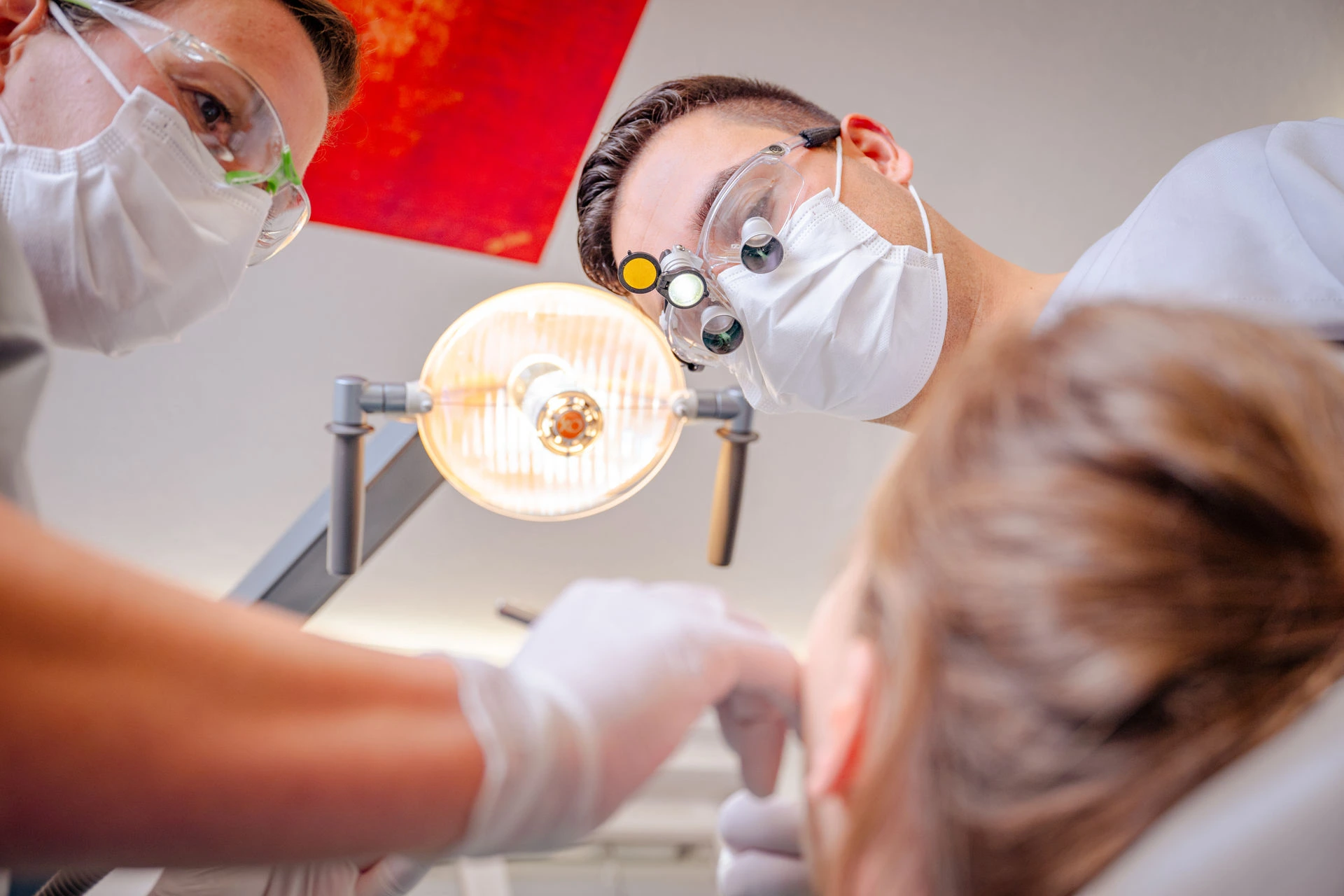
A ceramic implant is more than a replacement root - it is a long-term decision about what stays in your jaw for years. We plan it the biological way: metal-free material, careful diagnostics and timing chosen with your overall health in mind.
03 Getting here from Copenhagen
A short journey south
The practice is in Bad Schwartau, immediately adjacent to Lübeck in Schleswig-Holstein, northern Germany. From Copenhagen the last stretch is short however you travel - here are the two main options.
~55 minCopenhagen → Hamburg, direct flight
Fly Copenhagen → Hamburg
Direct flights from Copenhagen to Hamburg Airport (HAM) take about 55 minutes. From Hamburg it is roughly a 45-55 minute drive, or about a 1h10-1h25 train journey, onward to Lübeck and Bad Schwartau.
~45 minScandlines ferry, Rødby → Puttgarden
Drive via the Rødby crossing
From Copenhagen, the Rødby ferry terminal is roughly 1.5 hours by car. Take the Scandlines ferry to Puttgarden (about 45 minutes, with frequent departures), then about one hour onward to Lübeck/Bad Schwartau.
Under wayFehmarnbelt tunnel, first elements placed 2025
The Fehmarnbelt link
A fixed road-and-rail tunnel between Puttgarden and Rødby is under construction, with the first elements placed in 2025. Until it opens, the Scandlines ferry remains the direct, frequent crossing on the Copenhagen-Lübeck route.
~16 kmØresund Bridge, Copenhagen ↔ Malmö
Coming from Malmö too
The Øresund Bridge links Copenhagen and Malmö over a roughly 16 km fixed crossing - about 35-40 minutes by train - so patients on the Swedish side of the strait can reach the same routes south with ease.
04 What a ceramic implant is
Zirconia, not metal - and why it matters
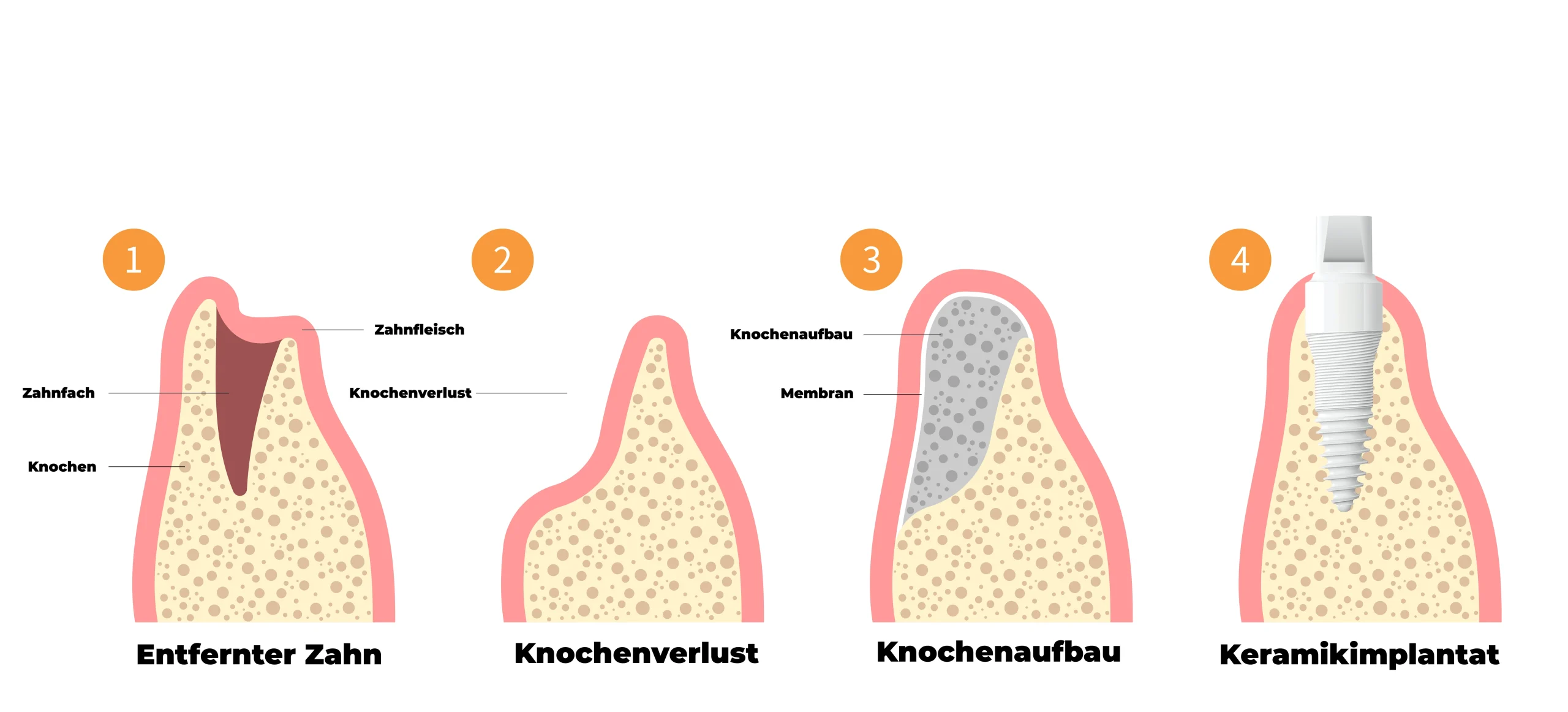
Ceramic implants are made from zirconia, a strong, tooth-coloured material that contains no metal. For patients who prefer to avoid metal entirely - whether out of a general wish for biocompatibility, sensitivity to dental materials, or simply a preference for a more natural result - they are an alternative to the more common titanium implant. Because the material is pale rather than grey, there is no dark shadow showing through at the gumline, which can matter for front teeth in particular.
Just as importantly, ceramic implants fit a biological philosophy: a single material in the jaw, chosen for how it sits with the body over the long term. They are not right for every case, and we will tell you so honestly. Whether a ceramic implant suits your situation depends on the bone available, the health of the surrounding gum and the position of the tooth - which is why a clinical examination and imaging always come before any recommendation.
- Metal-free zirconia - no titanium in the jaw
- Tooth-coloured material, no grey shadow at the gumline
- Chosen as part of a biological, whole-body approach
- Suitability confirmed only after examination and imaging
05 Planned in 3D, explained in English
Precision diagnostics, treated in English
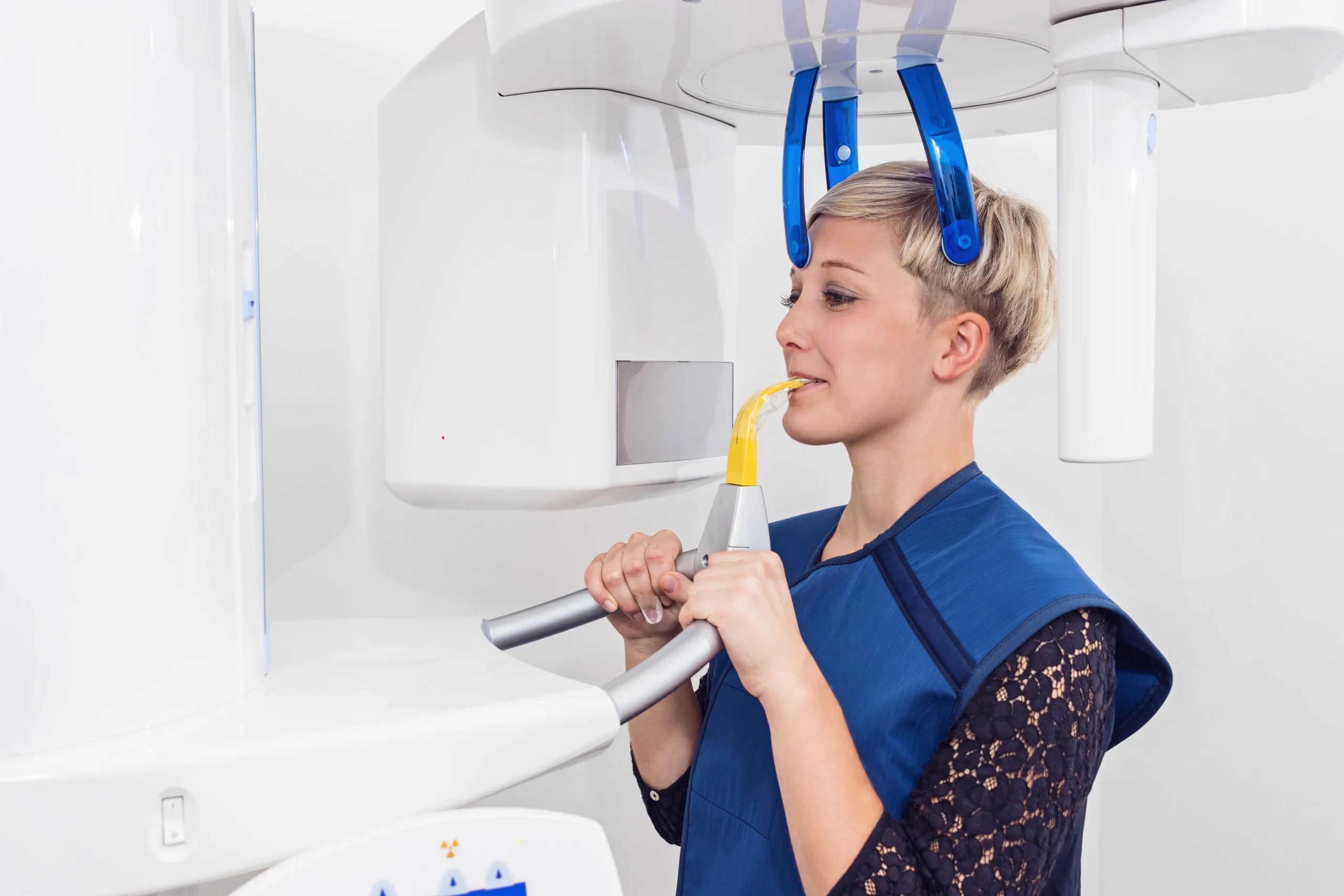
Placing an implant well begins long before the appointment itself. We use three-dimensional imaging to understand the bone and surrounding structures, so the position and angle of a ceramic implant can be planned precisely and conservatively. For a patient travelling from Copenhagen, that planning is what makes it possible to group appointments sensibly and keep the number of trips realistic.
And every step is explained in clear English - from your diagnosis and the imaging findings, through the choice of materials, to exactly what your recovery and aftercare involve. You do not need any German to understand your options or to ask questions; nothing is lost in translation. You leave with written documentation of what was done and what comes next.
- Three-dimensional (CBCT) planning for precise placement
- Consultations and aftercare in clear English
- Appointments grouped to keep trips from Copenhagen efficient
- Written documentation you can take home
06 Explore the treatments
Ceramic implants, and the care around them
Ceramic implants rarely stand alone - they sit within a wider biological approach. Here are the core pages most relevant to patients from Copenhagen.
Ceramic Implants
The full detail on metal-free zirconia implants - what they are, who they suit and how treatment works.
IIBiological Dentistry
The whole-body philosophy behind every implant decision - materials and methods chosen with your general health in mind.
III3D / CBCT Imaging
The precise three-dimensional diagnostics used to plan ceramic implant placement confidently.
IVVital Aesthetics
Natural-looking, metal-free aesthetic dentistry that keeps healthy tooth structure intact.
VAll Services
See the full range of biological and holistic treatments offered at the practice.
07 Reimbursement & insurance
Private insurance and your invoice
Reimbursement of treatment costs may be possible through a private (supplementary) dental insurance policy. Because every policy is different, please clarify with your own insurer before treatment what it covers in your case.
From us you receive a standard invoice, itemised by the treatments provided. Whether a public system contributes anything is decided solely by your own insurer or authority; we do not advise on this.
08 Planning your visit
How an implant trip from Copenhagen usually works
Implant treatment normally involves more than one stage, so we coordinate it carefully to make the time you spend away from Copenhagen count.
Get in touch
Briefly describe your situation in the contact form. We reply in English with the next steps.
Assess & plan
We examine, take 3D imaging and confirm whether a ceramic implant suits your case, then outline a realistic visit schedule.
Implant visits
Treatment stages are grouped sensibly so you make the fewest trips from Copenhagen your case allows.
Healing & records
You leave with clear aftercare guidance, written notes on what was done and an itemised invoice.
How many trips will I need?
Honestly, it depends on your case. Implant treatment usually has more than one stage - placement, healing and the final restoration - and the number of visits varies. Some patients from Copenhagen manage with a small number of well-planned trips; others need a little more. We explain a realistic plan only after we have examined you and seen your imaging, and we build it around your travel rather than the other way around.
Start with a no-obligation enquiry →Questions
Ceramic implants for Copenhagen patients - FAQ
Ceramic implants are dental implants made from zirconia, a tooth-coloured, metal-free material. They are often chosen by patients who prefer to avoid metal or want a natural-looking result at the gumline.
Patients often seek metal-free, biological implant expertise and a holistic approach. Copenhagen is well connected to Germany, which can make planning travel for treatment relatively straightforward.
Suitability depends on factors such as bone, gum health and the position of the tooth. We confirm whether ceramic implants are appropriate for you only after a clinical examination and imaging.
Reimbursement may be possible through a private (supplementary) dental insurance policy - please check with your own insurer before treatment what it covers. We issue a standard invoice, itemised by the treatments provided.
Implant treatment usually involves more than one stage, and the exact number of visits depends on your case. We aim to coordinate appointments efficiently and explain a realistic plan after assessment.
09 Get started
Request your appointment.
Tell us about your situation and your journey from Copenhagen. We reply personally - in English - with clear next steps. No obligation.
Practice
Hauptstraße 50
23611 Bad Schwartau
Germany
Metal-free implants, a short journey from Copenhagen.
Tell us about your situation and we'll reply in English with clear next steps - no obligation.
Request an appointment