01 Biological dentistry · Explainer
Are root canals risky? A holistic perspective.
Root canal treatment is one of the most common dental procedures in the world - and one of the most debated in biological medicine. Here is a calm, evidence-aware look at what it actually involves, what the real concerns are, and when a metal-free alternative may suit you better.
02 What it actually is
Saving a tooth that has lost its nerve.
When the soft inner tissue of a tooth - the pulp, which carries the nerve and blood supply - becomes inflamed or infected, it can cause severe pain and, untreated, lead to an abscess. A root canal treatment (endodontic therapy) removes that diseased pulp, cleans and shapes the fine canals inside the root, and seals them with a filling material.
The aim is straightforward and often valuable: keep your own tooth in place instead of losing it. For many people that is a good outcome - the tooth is no longer painful and can continue to function for years. The procedure has been refined over decades and, performed well, has a high technical success rate.
So why is it debated? Because once the pulp is removed, the tooth is no longer vital - it has no living tissue or blood flow inside. From a biological standpoint, that raises a fair question worth thinking through honestly.

03 Our position
Neither fear, nor
blanket reassurance.
We do not tell patients that every root canal is a hidden danger, and we do not pretend the biological questions don't exist. We weigh the evidence with you, tooth by tooth, and decide together.
04 The real concerns
What the holistic debate is really about.
The honest concerns are specific and biological - not a reason to panic, but worth understanding before you decide.
Residual bacteria
A tooth root contains thousands of microscopic dentinal tubules. Even careful cleaning cannot always reach every one, so some bacteria can remain inside a treated, non-vital tooth.
A non-vital tooth
Without a living blood supply, the body's immune defences no longer circulate through the tooth as they once did. The tooth is retained, but it is no longer a vital part of your system.
The individual factor
Whether any of this matters varies from person to person - and especially for patients whose immune systems are already under strain. That is exactly why we assess each case individually.
This is a measured summary of an ongoing discussion in biological dentistry, not a diagnosis or a claim that root-filled teeth cause specific illnesses. The right answer depends on your tooth and your health - which is what a consultation is for.
A root-filled tooth is not automatically a problem - and it is not automatically safe. The honest answer is it depends, and that is what we examine together.
Dmitri Klass · Biological dentistry, Bad Schwartau
05 Keep or replace?
Two reasonable paths - chosen with you.
There is rarely one universal answer. In many situations a well-executed root canal on a tooth that can be predictably saved is a sensible, tooth-preserving choice. In others - particularly where infection persists, a tooth is fractured, or whole-body health is the priority - careful extraction followed by a metal-free ceramic implant can be the cleaner long-term solution.
- Keep the tooth when it can be sealed predictably and is symptom-free.
- Replace it when infection persists, the tooth is fractured, or it is not restorable.
- Weigh your immune situation, your priorities and the 3D findings together.
- Never remove a healthy tooth on theory alone.
06 How we decide
An evidence-aware, four-step assessment.
3D diagnostics
Low-radiation CBCT imaging shows the root, canals and surrounding bone in detail - far more than a flat X-ray.
Whole picture
We review your symptoms, history and general health - not just the single tooth in isolation.
Honest options
You hear the real choices - keep, treat, or replace - with the trade-offs of each explained plainly.
A decision, together
The final choice is yours, made with full information and aligned with your health philosophy.
07 Who this is for
If you are weighing up a root canal.
This perspective is for patients who want more than a yes-or-no answer - people who like to understand the biology before they decide, and who value a metal-free, whole-body approach to dentistry.
- You have been advised to have a root canal and want a considered second opinion.
- You already have root-filled teeth and are unsure whether to leave them or act.
- You prefer metal-free, biocompatible dentistry and want options that respect that.
- You are an international or English-speaking patient looking for an honest assessment.
Root-filled teeth are also where the tooth-body question comes up most often - usually as which tooth is connected to the heart. Our tooth-organ chart gives the honest answer, with its limits.
08 Related care
The treatments behind this decision.
Biological Dentistry
The whole-body approach this perspective grows out of - materials and methods chosen for your physiology.
iiCeramic Implants
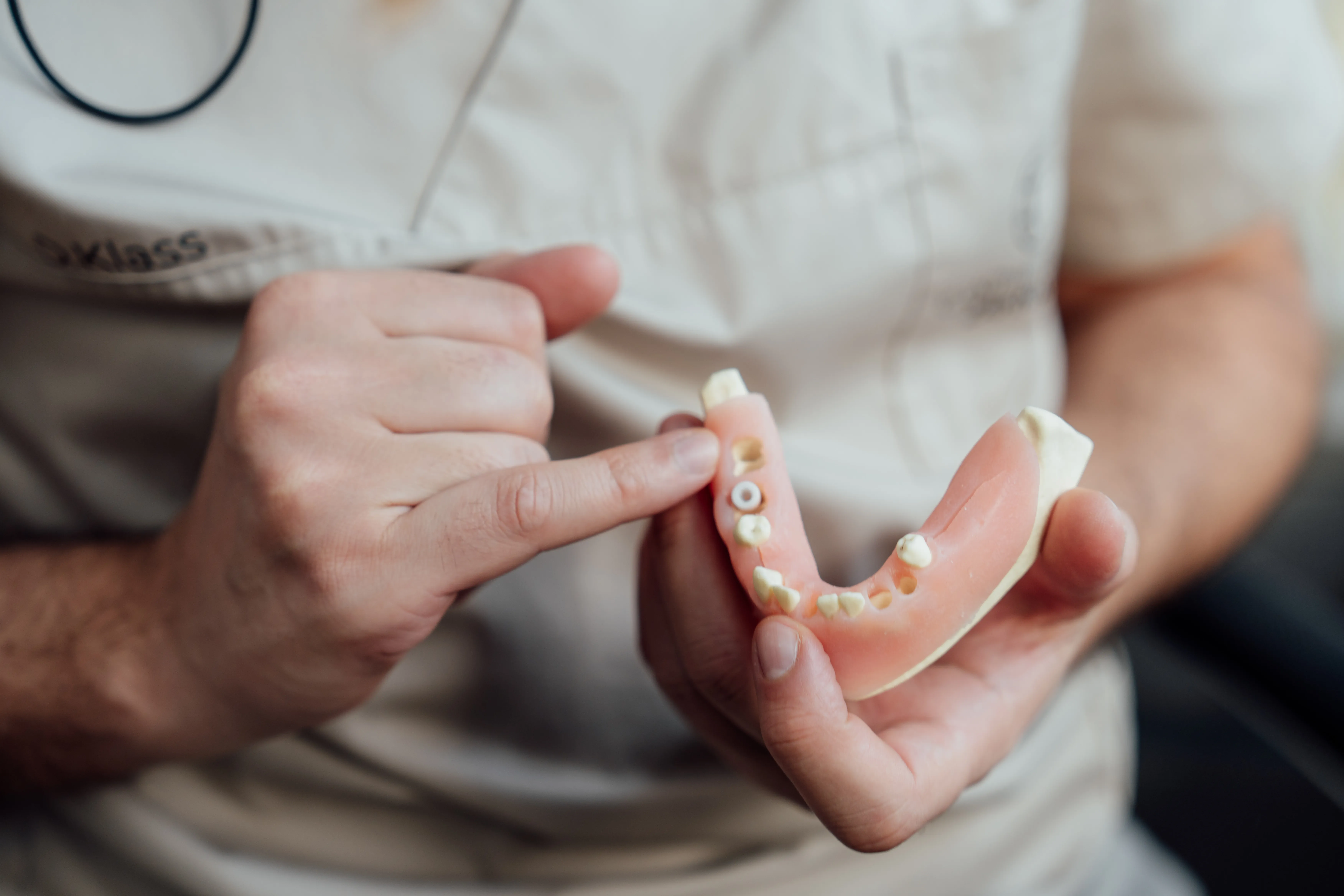
The usual metal-free alternative when a tooth cannot be predictably saved - zirconia, not titanium.
iii3D / CBCT Imaging
Precise, low-radiation diagnostics that let us see the root and bone before any decision is made.
ivTeeth & the Immune System
How teeth, gums and jaw affect immunity - chronic inflammation, root-canal and extraction sites, and the oral-systemic link.
vThe Tooth-Meridian Chart
Which tooth is traditionally linked to which organ in biological dentistry - and what it does and does not mean.
viAll Treatments
The full range of metal-free, biological care at the practice in Bad Schwartau.
09 Questions
Honest answers about root canals.
For most people a well-performed root canal is not dangerous, and millions are carried out every year. The honest position is that a treated, non-vital tooth can in some cases harbour residual bacteria in the dentinal tubules. Whether that matters depends on the individual - the tooth, the quality of the treatment and your immune situation. We assess each case rather than make blanket claims.
Not automatically. A symptom-free, well-sealed root-filled tooth that looks healthy on a 3D scan often does not need to be touched. We only consider replacement when there are clear findings - persistent infection, a fracture, or symptoms that point to the tooth. Removing a healthy tooth on theory alone is not biological dentistry.
If a tooth cannot be saved predictably, the usual biological alternative is careful extraction followed, after healing, by a metal-free ceramic (zirconia) implant. This replaces the tooth without leaving non-vital tissue in the jaw and without titanium. In other cases a bridge or simply doing nothing may be appropriate.
We use 3D / CBCT imaging to see the root and surrounding bone in detail, review your symptoms and general health, and discuss your own priorities. The decision is made with you, weighing the chance of keeping the tooth long-term against a clean, metal-free replacement.
Yes. English-speaking and international patients are welcome. If you have been advised to have a root canal or already have root-filled teeth you are unsure about, you can briefly describe your situation via our contact form; we will reply with the next steps, and the examination, including 3D diagnostics where needed, takes place at our practice, followed by an honest, evidence-aware assessment.
Unsure about a root canal? Get an honest second opinion.
Tell us your situation - in English. We reply personally with a calm, evidence-aware view and your real options.
Request an appointment